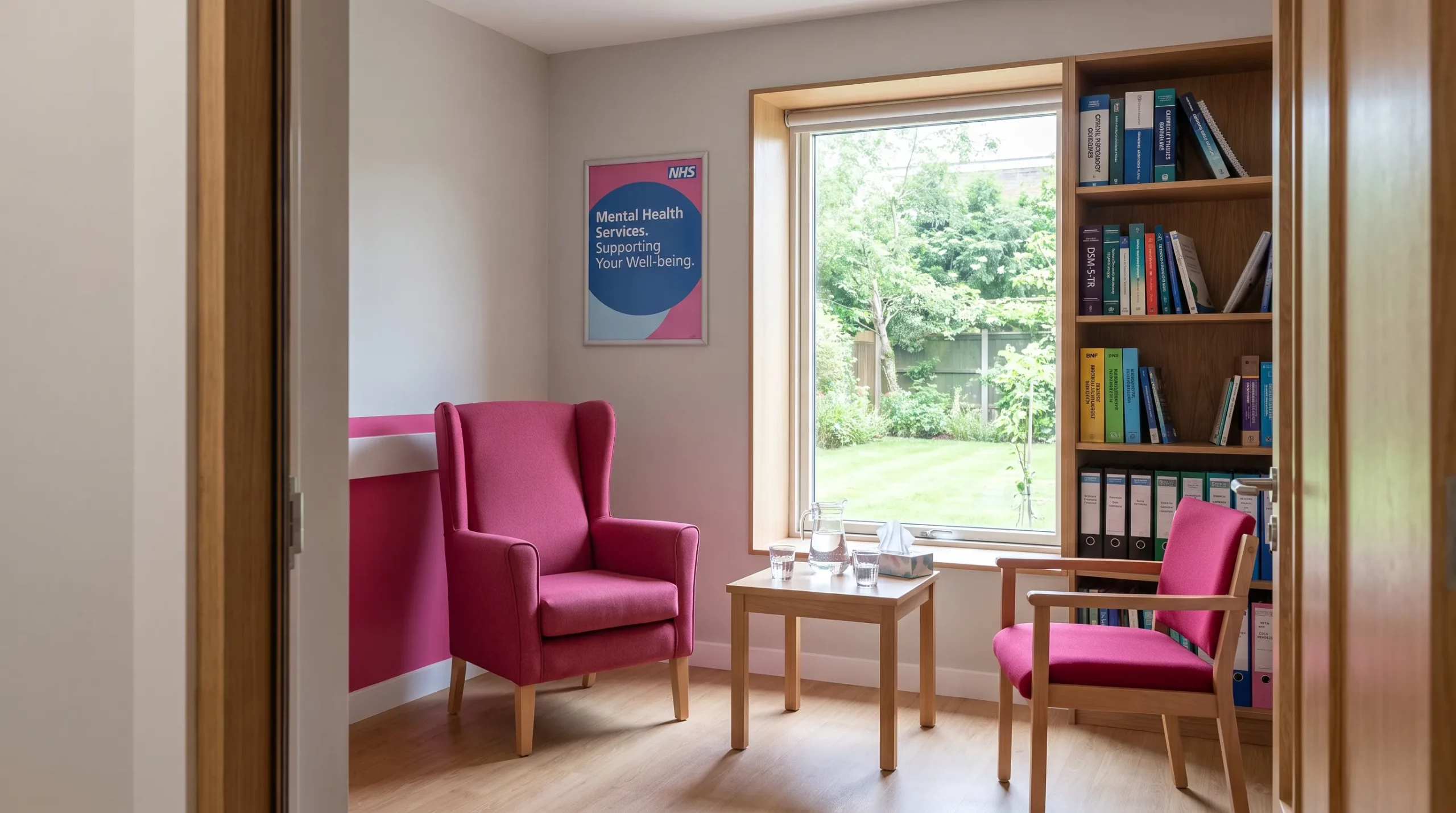
Two chairs face each other in a mental health assessment room prepared for a conversation about screening results.

How Mental Health Screening Tools Work and What Results Mean

A result from mental health screening tools can help you put difficult experiences into words. It can show how often symptoms have occurred and whether a fuller assessment would be useful. What it cannot do is confirm a diagnosis or explain everything behind the way you feel.

The most useful way to read a screening result is to consider three things together: the score, your individual answers and the effect on everyday life. Here is how common questionnaires work, what their numbers mean and how to decide on your next step.

How a questionnaire becomes a result

Most screening questionnaires ask about a defined group of symptoms over a specific period. The PHQ-9, for example, asks about depressive symptoms during the previous two weeks. Each answer receives a numerical value and those values are added together.

On the PHQ-9 and GAD-7, answers run from “not at all”, worth 0 points, to “nearly every day”, worth 3 points. A higher total generally indicates more frequent symptoms across the areas covered.

Good mental health screening tools have been tested against clinical assessments in particular populations. That validation helps establish useful score thresholds, but it does not make a questionnaire equivalent to an appointment with a clinician.

The wording and timeframe matter. Answering according to your worst-ever episode, rather than the period requested, changes what the result represents. Missing questions or changing the scoring method can also make a total difficult to interpret.

Common questionnaires and their purposes

Questionnaire Main purpose Period covered
PHQ-9 Screens for depressive symptoms and measures their severity Previous two weeks
GAD-7 Screens for symptoms associated with generalised anxiety disorder Previous two weeks
PHQ-2 and GAD-2 Brief initial checks that may lead to fuller assessment Previous two weeks
Edinburgh Postnatal Depression Scale (EPDS) Screens for depressive symptoms during pregnancy and after birth Previous seven days

These questionnaires are not interchangeable. A low GAD-7 score does not rule out every anxiety-related condition, such as a specific phobia or obsessive-compulsive disorder. A tool also needs to suit the person's age, language and circumstances.

Understanding scores from mental health screening tools

Scores are often grouped into symptom-severity bands. These labels describe the questionnaire result, not a confirmed clinical diagnosis.

The commonly used PHQ-9 and GAD-7 bands are:

Symptom band PHQ-9 score GAD-7 score
Minimal 0 to 4 0 to 4
Mild 5 to 9 5 to 9
Moderate 10 to 14 10 to 14
Moderately severe 15 to 19 No separate band
Severe 20 to 27 15 to 21

For example, a PHQ-9 result of 14 falls within the moderate symptom band. It does not mean you are “14 out of 27 depressed”, have a particular percentage chance of depression or automatically need medication.

Similarly, moving from 9 to 10 crosses a commonly used threshold, but it does not mark a sudden biological change. The boundary helps guide assessment; it is not a dividing line between being well and being unwell.

Why the same total can mean different things

Two people can receive identical totals from mental health screening tools while having very different needs. One might report poor sleep, tiredness and appetite changes. Another might report persistent hopelessness and thoughts of self-harm.

Their totals could match, yet the individual answers would lead to different conversations about safety, physical health and support. This is why checking only the final number misses important information.

Daily functioning also matters. Someone with a relatively low score may still be struggling to leave home, care for a child or manage work. Someone with a higher score may be maintaining those activities while experiencing considerable distress.

NICE recommends a comprehensive depression assessment that considers more than symptom counts, including duration, history and functional difficulties [3]. Bring examples of what has changed, rather than feeling you need a particular number to justify asking for help.

How accurate are these questionnaires?

Accuracy has several meanings. Sensitivity describes how well a test identifies people who have the condition being assessed. Specificity describes how well it identifies people who do not.

Research on mental health screening tools shows why they can be useful without being definitive:

  • In the original PHQ-9 validation study, a score of 10 or above had 88% sensitivity and 88% specificity for major depression [1].
  • In the original GAD-7 validation study, the commonly used threshold of 10 had 89% sensitivity and 82% specificity for generalised anxiety disorder [2].

Physician-researcher Kurt Kroenke and colleagues described the PHQ-9 as “a reliable and valid measure of depression severity” [1]. Robert Spitzer and colleagues described the GAD-7 as “a valid and efficient tool for screening for GAD and assessing its severity” [2]. Neither description means a score can replace clinical assessment.

These figures come from particular study populations. They are not guarantees for every age group, translated questionnaire or online setting.

A positive result is not a percentage probability

An 88% sensitivity figure does not mean that someone with a positive result has an 88% chance of depression. The likelihood that a positive result reflects a condition also depends on how common that condition is in the population being tested.

A false positive means the screen flags possible illness that a fuller assessment does not confirm. A false negative means the screen does not flag a condition that is present.

Both are reasons to treat a result as a starting point. A concerning score deserves attention, but a reassuring one should not override persistent distress or a clear change in your ability to cope.

What a score leaves out

Even well-validated mental health screening tools cannot establish the cause of symptoms. Poor sleep, fatigue and difficulty concentrating can occur alongside depression, but they can also relate to pain, physical illness, medication effects or other circumstances.

A clinician may ask about recent bereavement, alcohol or drug use, previous episodes and periods of unusually high energy or reduced need for sleep. These details can change the assessment and the appropriate support.

Physical symptoms also deserve attention in their own right. Persistent jaw discomfort, tooth wear or dry mouth should not simply be labelled “stress”. Learning what an oral health check can reveal can help explain why a dental examination may be appropriate alongside, rather than instead of, a mental health discussion. Dental findings do not diagnose a mental health condition.

Our guide to how physical health and mental health affect each other explores why discussing both together can be useful.

A questionnaire also cannot capture every cultural or personal way of expressing distress. If its wording does not fit your experience, explain that during your appointment rather than assuming the result must be right.
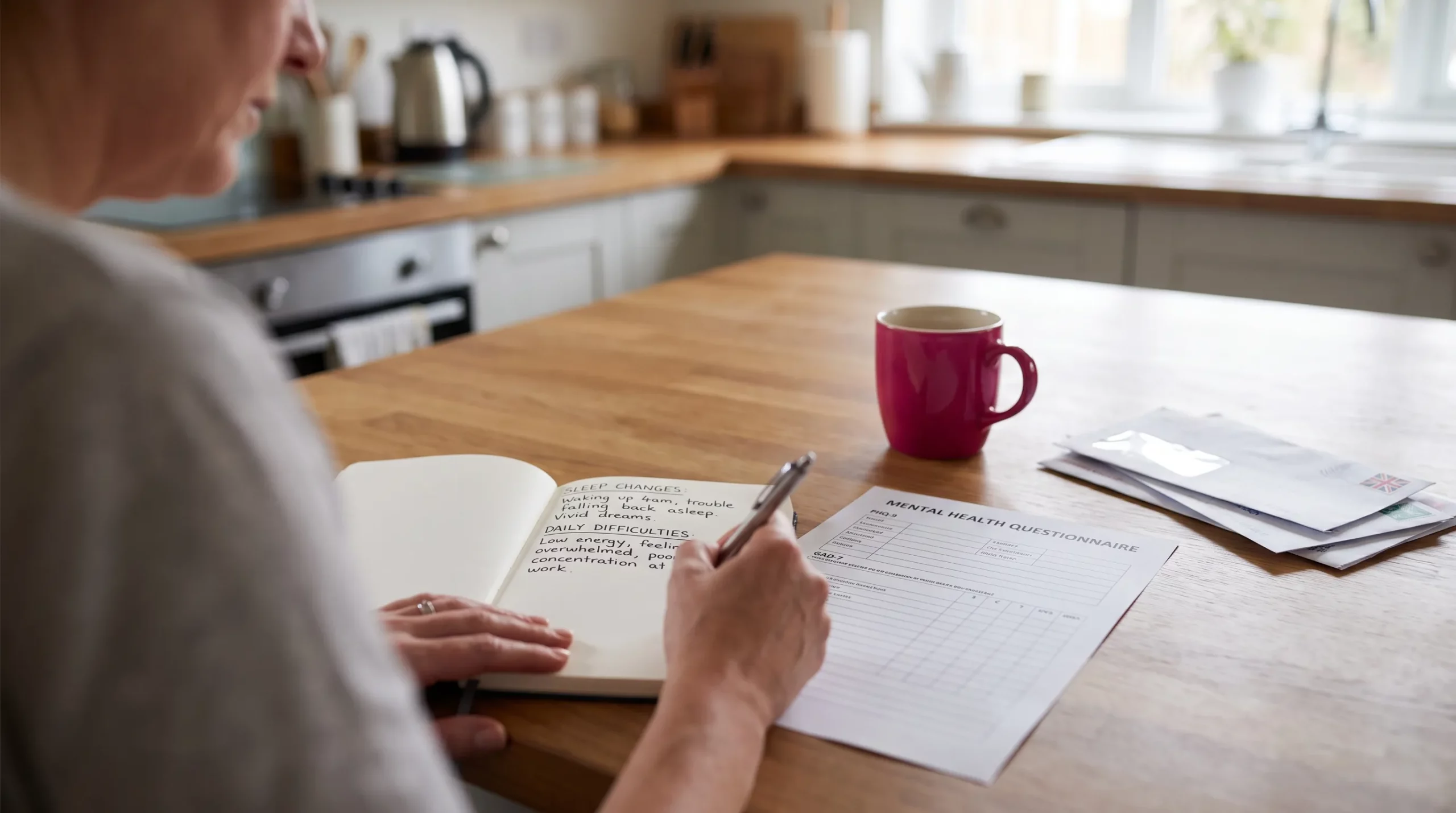
An adult notes sleep changes beside a blank questionnaire, preparing to discuss mental health screening tools with a GP.

What to do after seeing your result

Use mental health screening tools to prepare for a conversation, not to decide whether you deserve one. There is no minimum score required to ask for support.

A practical follow-up is to:

  • Save the details: Note the questionnaire name, date, total and any answers that particularly concerned you.
  • Describe the impact: Record changes in sleep, relationships, work, study or self-care, with examples where possible.
  • Arrange appropriate support: Contact your GP if symptoms persist, worsen or interfere with daily life, regardless of the score.
  • Mention relevant context: Include physical symptoms, medicines, previous mental health difficulties and recent changes in your circumstances.

You do not need to complete several different quizzes before booking an appointment. If you already know you are struggling, that is enough reason to seek advice.

A GP or mental health professional may review your answers, ask further questions and discuss suitable options. These might include monitoring, psychological support, treatment for a physical contributor or other care based on the assessment. A screening category alone does not determine the treatment.

When to get urgent help

Do not use mental health screening tools to decide whether an immediate safety concern is serious enough. Your safety takes priority over any total score.

PHQ-9 item 9 asks about thoughts of being better off dead or hurting yourself. Any answer other than “not at all” warrants prompt discussion with a healthcare professional, even when the overall score is low. That answer alone does not establish immediate danger, but it needs follow-up.

If you have seriously harmed yourself, taken an overdose or cannot keep yourself or someone else safe, call 999 or go to A&E. You do not need a screening result first.

For urgent mental health support in England, call NHS 111 and select the mental health option. Elsewhere in the UK, use your local NHS urgent mental health service. Samaritans is available on 116 123 if you need someone to talk to. NHS guidance explains urgent and emergency routes in more detail [4].

Can you repeat a screening questionnaire?

Repeating the same questionnaire can help you and a clinician follow symptom changes. Keep the version, wording and scoring method consistent, and use a validated translation if one is needed.

For the PHQ-9 and GAD-7, remember that each result covers the previous two weeks. Repeating them every day produces heavily overlapping snapshots and can encourage unhelpful checking. Agree a useful review interval with your clinician, particularly during treatment.

Small score changes can reflect ordinary variation or differences in how you understood a question. A falling total is more meaningful when it accompanies improvements you can recognise, such as sleeping more consistently or managing everyday tasks more easily.

Repeated mental health screening tools should support that wider picture, not become the only measure of recovery. New safety concerns or worsening functioning deserve attention even if the total has fallen.

Frequently asked questions

Can an online questionnaire diagnose depression or anxiety? No. It can identify symptoms that warrant further assessment. Diagnosis requires a broader clinical assessment, including the pattern and duration of symptoms, their impact and possible alternative explanations.

What does a score of 10 mean on the PHQ-9 or GAD-7? It is the start of the commonly used moderate symptom band and a frequently used screening threshold. It usually supports further assessment, but it does not confirm a condition or automatically indicate medication.

Can mental health screening tools miss a problem? Yes. False negatives occur, and a questionnaire may not cover the difficulty you are experiencing. Seek advice if you remain concerned, particularly when symptoms are persistent, worsening or affecting daily life.

Is the 3-3-3 rule a screening tool? No. It is a grounding exercise, commonly described as noticing three things you can see, identifying three sounds and moving three parts of your body. It may help redirect attention during anxiety, but it does not assess or diagnose a condition.

Should I answer based on a good day or a bad day? Follow the questionnaire's stated timeframe. For the PHQ-9 and GAD-7, consider how often each symptom occurred across the previous two weeks, rather than answering only for today.

References

[1] Kroenke K, Spitzer RL, Williams JBW. The PHQ-9: Validity of a Brief Depression Severity Measure. Journal of General Internal Medicine. 2001.

[2] Spitzer RL, Kroenke K, Williams JBW, Löwe B. A Brief Measure for Assessing Generalized Anxiety Disorder: The GAD-7. Archives of Internal Medicine. 2006.

[3] NICE. Depression in adults: treatment and management, recommendations.

[4] NHS. Where to get urgent help for mental health.

Take a first step with HealthTest

If you would like a structured starting point, explore HealthTest's free health self-assessment tests. Results are immediate and intended to guide next steps, not replace medical advice.

For questions about the website or its quizzes, contact HealthTest. For help interpreting symptoms or deciding on treatment, speak with your GP or another qualified healthcare professional. Do not wait for a website response if you need urgent support.


Adults arrive at a community mental health centre to seek support and information.

Mental Health Questions and Answers for Everyday Concerns

Looking for mental health questions and answers often starts with an everyday uncertainty: is this stress, should I speak to someone or could an online test help? You do not need to know the name of a condition before asking for support. What matters is how you feel, how long it has lasted and how it affects your life.

Need help now? If someone is in immediate danger, has taken an overdose or cannot stay safe, call 999 or go to A&E. In England, call 111 and select the mental health option for urgent mental health support. Elsewhere in the UK, use your local NHS urgent mental health service. You can also call Samaritans on 116 123, free, day or night, for emotional support. Online quizzes and chat rooms are not emergency services.

Mental health questions and answers: is this stress or something more?

Stress, sadness and worry can be understandable responses to difficult circumstances. They do not automatically mean you have a mental illness. Equally, having an obvious reason for feeling distressed does not mean you must manage without help.

Look at three things: duration, intensity and impact. Are you recovering after a difficult day or feeling overwhelmed most days? Can you still manage meals, relationships and responsibilities? Are you avoiding things that previously felt manageable?

Mental health conditions are common. The World Health Organization’s 2022 World mental health report estimated that 970 million people, around one in eight worldwide, were living with a mental disorder in 2019. These are historical global estimates, not a way to assess your individual likelihood.

When the report was released, WHO Director-General Dr Tedros Adhanom Ghebreyesus said: “Everyone’s life touches someone with a mental health condition.” You are not unusual for needing support, even if people around you rarely discuss it.

When should I speak to a GP?

Arrange an appointment if your feelings are persistent, worsening or interfering with daily life. The NHS advises seeking help for depression symptoms that occur for most of the day, every day, for more than two weeks. That is not a requirement to wait: seek help sooner if symptoms are severe or you are struggling to cope.

Other reasons to ask for an assessment include panic attacks, increasing reliance on alcohol, changes in eating or difficulty getting through work or study. New experiences such as hearing voices or feeling unusually energised despite very little sleep also need prompt assessment.

Use mental health questions and answers to prepare for a conversation, rather than to decide whether you deserve one. You could tell the receptionist: “My mental health is affecting my everyday life and I need an appointment.” You do not have to explain everything at the reception desk.

Can an online test tell me what is wrong?

An online screening test can help you notice symptoms and organise what you want to discuss. It cannot confirm a diagnosis, rule out every condition or establish why you feel this way.

A score can be influenced by recent events, physical illness, sleep loss and how you interpret the questions. A low score does not cancel out significant distress. A higher score is a prompt for assessment, not proof that you have a particular disorder.

HealthTest’s free health self-assessment quizzes provide immediate results to help guide next steps. If you use one, note when you completed it and bring the result to your appointment alongside examples of what has changed. Do not delay urgent help to finish a questionnaire or repeat tests until you get a reassuring result.

What can I do when anxiety or low mood disrupts my day?

Start with the next manageable action, not a complete lifestyle overhaul. If you have missed meals, eat something accessible. If you are isolated, send one message. If a task feels impossible, reduce it to a small first step, such as opening the letter rather than resolving the whole problem.

Practical mental health questions and answers should leave room for limited energy, disability and financial pressure. Advice is only useful if it fits your circumstances. A short walk may help some people, while someone else may need rest, practical assistance or treatment first.

For the next day or two, consider:

  • One basic need: food, water, rest or taking prescribed medication as directed.
  • One connection: a brief conversation with someone who can listen without judging.
  • One reduction in pressure: postponing a non-essential task or asking for help with it.

These steps can support you, but they are not substitutes for care when symptoms persist. Avoid using alcohol or recreational drugs to manage distress, as they can worsen symptoms and create additional risks.

How can I stay hopeful while living with a health condition?

You do not have to stay positive all the time. Fear, frustration and grief can accompany pain, uncertainty or a new diagnosis. Acknowledging those feelings is different from giving up.

In the same WHO statement, Dr Tedros said: “Good mental health translates to good physical health.” This does not mean that positive thinking cures illness or that people are responsible for becoming unwell. It supports treating emotional wellbeing as part of healthcare, rather than an optional extra.

When using mental health questions and answers alongside information about a physical condition, separate what you can influence from what you cannot. You might be able to ask for clearer treatment information, discuss pain or request psychological support, even when the illness itself remains uncertain.

Our explanation of how physical and mental health affect each other explores that connection. If your mood changes after starting a medicine, speak to your prescriber rather than stopping it yourself.

Is there somewhere safe to talk online?

Moderated peer-support communities can offer connection with people who have similar experiences. Mind’s Side by Side, for example, is an online peer-support community for adults. Peer support is different from therapy, clinical assessment or emergency care.

Before joining a community, check its age requirements, moderation arrangements, reporting tools and privacy policy. Find out whether posts are publicly visible and whether moderators are available at particular times. “Anonymous” does not necessarily mean that a service collects no personal information.

Online mental health questions and answers can help you feel less alone, but another person’s experience does not establish which treatment is right for you. Avoid spaces that encourage self-harm, promote extreme diets or tell you to stop prescribed medication.

You can leave a discussion that makes you feel worse. For urgent distress, use NHS services or a listening service rather than waiting for replies from strangers.

A trusted friend listens as an adult prepares questions about mental health in a library.

How can I judge whether online advice is trustworthy?

Look for a named author or reviewer, clear sources, a review date and an explanation of what the information cannot tell you. For UK treatment pathways, NHS guidance is generally a more appropriate starting point than an anonymous social media post.

Search position is not a clinical quality rating. Agencies such as SEO Bridge, a search engine optimisation agency, help businesses improve their online visibility. That is a different job from assessing whether health advice is medically sound.

Be cautious about pages promising a guaranteed cure, diagnosing you from one symptom or making support conditional on buying supplements. A trustworthy explanation should acknowledge uncertainty and make it clear when professional assessment is needed.

How do I help someone who does not want support?

Choose a calm moment and describe what you have noticed without applying a diagnosis: “You seem exhausted and you have stopped coming to things. How have you been feeling?” Listen before offering solutions.

Someone may refuse help because they feel ashamed, have had an upsetting experience with services or cannot face arranging an appointment. Ask what makes support difficult. Offering to sit beside them while they call a GP may be more useful than repeatedly telling them to seek help.

Sharing mental health questions and answers can open a conversation, but it should not become a way to prove that someone is ill. Adults generally make their own care decisions, even when others disagree. You can keep offering support while setting limits on what you can safely provide.

If you are worried about suicide, ask directly whether they are thinking about ending their life. Do not promise to keep immediate danger secret. If there is an immediate threat to safety, call 999. If you are unsure how urgently to act, seek advice from an urgent NHS service.

What happens when I ask for professional help?

A GP may ask about symptoms, sleep, physical health, medication, alcohol or drug use and anything affecting your safety. They may consider physical causes or discuss treatment and referral options. You can bring notes, ask for information in writing or take someone you trust if that helps.

You do not need polished answers. “I am struggling and I do not know how to explain it” is a reasonable starting point. Bringing examples is often more useful than choosing a diagnostic label.

Mental health questions and answers can also help you prepare questions of your own: what are the options, what might help and what should I do if things worsen?

In England, adults can usually self-refer to NHS Talking Therapies for anxiety and depression without first seeing a GP. Eligibility and local arrangements vary. Other UK nations have different access routes, so check your local NHS service.

Frequently asked questions

Can I have a mental health condition and still work or enjoy things? Yes. Symptoms can fluctuate, and being able to work, laugh or care for someone does not rule out a condition. An assessment considers the wider pattern, not whether you appear distressed all the time.

Will everything I tell a professional stay private? Healthcare information is generally confidential, but there are exceptions, including certain serious safety concerns and legal obligations. Ask the professional to explain confidentiality and its limits before sharing if you are worried.

Can reading mental health questions and answers replace therapy? No. Reliable information can explain options and help you prepare, but it cannot provide an individual assessment or the ongoing support offered through treatment. You can seek help even without a diagnosis.

What if I am under 18? Speak to a trusted adult, your GP or an appropriate young people’s service. Adult screening tools and peer-support spaces may not be suitable for your age. If home does not feel safe, tell another trusted professional.

References

Take a next step with HealthTest

Use these mental health questions and answers as a starting point for understanding your concerns, not as a diagnosis. If you have a question about HealthTest’s quizzes or using the website, contact the HealthTest team.

For an assessment of symptoms or treatment advice, speak to a qualified healthcare professional. If your safety is at risk, use the urgent support options above rather than waiting for a website response.

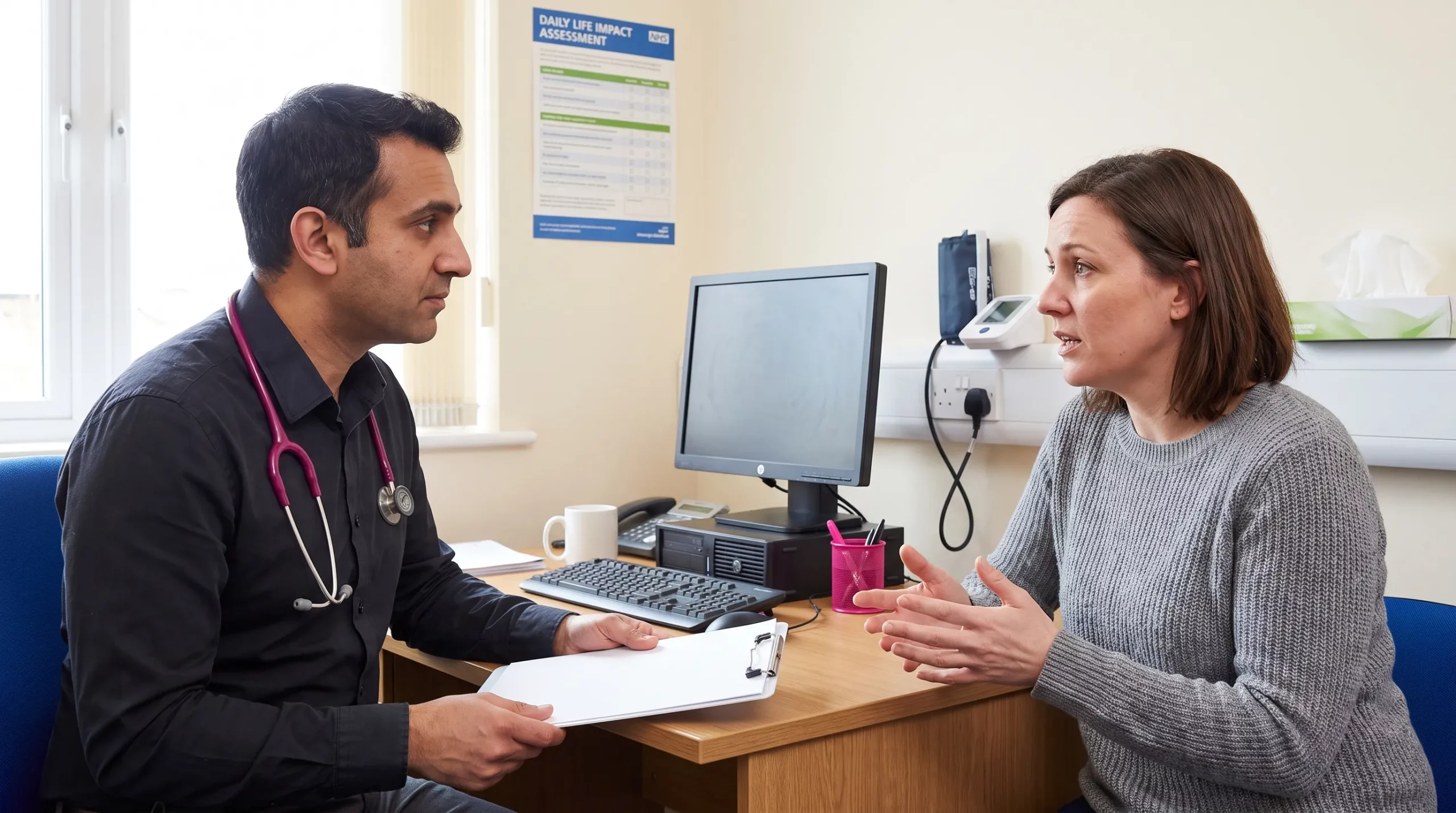
An adult discusses symptoms and a screening questionnaire with a GP during a consultation about possible next steps.

How Screening Tools Help You Understand Your Health

Used well, screening tools can help you notice symptoms, recognise health risks and decide whether to seek advice. They turn a general feeling that something is wrong into information you can discuss with a healthcare professional. But a questionnaire score is not a diagnosis, and a reassuring result cannot rule out every problem.

Understanding what a tool measures, who it was designed for and what happens after the result makes it much more useful. Here is how to approach common questionnaires and checks without giving their scores more weight than they deserve.

A useful starting point, not a diagnosis

A screening test looks for signs that someone may need further assessment. It does not usually establish the cause of symptoms or confirm a condition on its own.

There is also a distinction between organised population screening and symptom questionnaires. NHS screening programmes generally invite people who appear healthy to be checked for particular risks or conditions. A questionnaire completed because you already feel anxious or low is often better described as symptom assessment or case-finding.

Both approaches can guide further investigation, but neither replaces a clinical conversation. A GP may need to consider your medical history, medicines, examination findings or laboratory results before recommending treatment.

The practical question is therefore not simply, “What is my score?” It is, “What should I do with this information?” A useful result should help answer that question, rather than leave you with an unexplained number.

Common screening tools used in healthcare

Different questionnaires measure different things. Some ask about recent symptoms; others combine measurements and clinical information to estimate risk.

Tool Main purpose What the result cannot establish alone
PHQ-9 Assess depressive symptoms over the previous two weeks A confirmed diagnosis or the cause of low mood
GAD-7 Assess anxiety symptoms over the previous two weeks Every type of anxiety disorder or its cause
MUST Identify adults at risk of malnutrition A complete nutritional diagnosis or treatment plan

These are established clinical examples. An online quiz may use a different questionnaire, so check which instrument, if any, it names.

PHQ-9: depressive symptoms

The Patient Health Questionnaire-9 asks nine questions about experiences such as low mood, loss of interest, sleep difficulties and concentration problems. Scores range from 0 to 27, with higher scores indicating a greater reported symptom burden.

In the original 2001 primary-care validation study, a score of 10 or above had 88% sensitivity and 88% specificity for major depression. These figures describe performance in that study, not a guarantee for every person or website.

Clinician-researchers Kurt Kroenke, Robert Spitzer and Janet Williams described the PHQ-9 as a “reliable and valid measure of depression severity”. Their findings support its clinical usefulness, but screening tools still need interpretation alongside symptoms, functioning and medical history.

An answer indicating thoughts of death or self-harm needs attention regardless of the total score.

GAD-7: anxiety symptoms

The Generalised Anxiety Disorder-7 questionnaire contains seven questions and produces a score from 0 to 21. It asks about experiences including persistent worry, difficulty relaxing and feeling afraid that something awful might happen.

In their 2006 validation paper, Robert Spitzer and colleagues called it “a valid and efficient tool for screening for GAD”. At a cut-off of 10, the study reported 89% sensitivity and 82% specificity for generalised anxiety disorder.

That does not mean the questionnaire identifies every anxiety-related problem. Panic attacks, obsessive-compulsive symptoms or trauma-related difficulties may require different questions and a fuller assessment.

MUST: risk of malnutrition

The Malnutrition Universal Screening Tool, usually called MUST, is used to identify adults at risk of malnutrition. It combines body mass index (BMI), unplanned weight loss over the previous three to six months and an acute disease effect score.

The acute disease component applies when someone is acutely ill and has had, or is likely to have, no nutritional intake for more than five days. A total score of 0 indicates low risk, 1 medium risk and 2 or more high risk, with management guided by the setting and clinical circumstances.

Unlike symptom-based screening tools, MUST requires measurements and information that may need professional help to obtain accurately. It is not an eating-disorder test, and having a higher body weight does not exclude nutritional risk. Unplanned weight loss deserves attention even when BMI remains in a higher range.

How to interpret a score without jumping to conclusions

A result is most helpful when you understand both what it suggests and what it might miss. Labels such as “positive”, “negative” or “moderate” are not complete explanations of your health.

Look first at the purpose of the questionnaire. Is it estimating risk, measuring symptom severity or suggesting that further assessment would be sensible? Those are different tasks.

A positive result can be a false alarm

A false positive happens when a test flags a possible condition that further assessment does not confirm. Symptoms often overlap: poor sleep and tiredness, for example, can occur with depression, physical illness, medicine side effects or demanding life circumstances.

Specificity describes how well a test identifies people who do not have the condition being assessed. Using the PHQ-9 study figure as an illustration, 88% specificity would mean roughly 12 positive results among 100 people without major depression under comparable conditions.

This is why screening tools should open a conversation rather than close one with a diagnosis. The proportion of positive results that prove correct also depends on how common the condition is in the group being tested.

A low score can still miss a problem

A false negative happens when a condition is present but the test does not flag it. This can occur because the questions do not capture your particular symptoms, you interpret them differently or your difficulties fluctuate.

Someone might also minimise symptoms because they feel embarrassed or have become used to struggling. Conversely, completing a questionnaire during an unusually difficult week may produce a result that needs more context.

Persistent symptoms, worsening symptoms and difficulty managing daily life matter even when a score is low. You do not need a particular number to justify asking for help.

The setting changes the meaning

Evidence from one group does not automatically apply to everyone. Age, language, disability, pregnancy and existing health conditions can affect whether a questionnaire is suitable and how its results should be interpreted.

A tool validated in adult primary care may not be appropriate for a child without adaptation and supporting evidence. An online version should also preserve the original wording, response options and scoring if it claims to use a validated instrument.

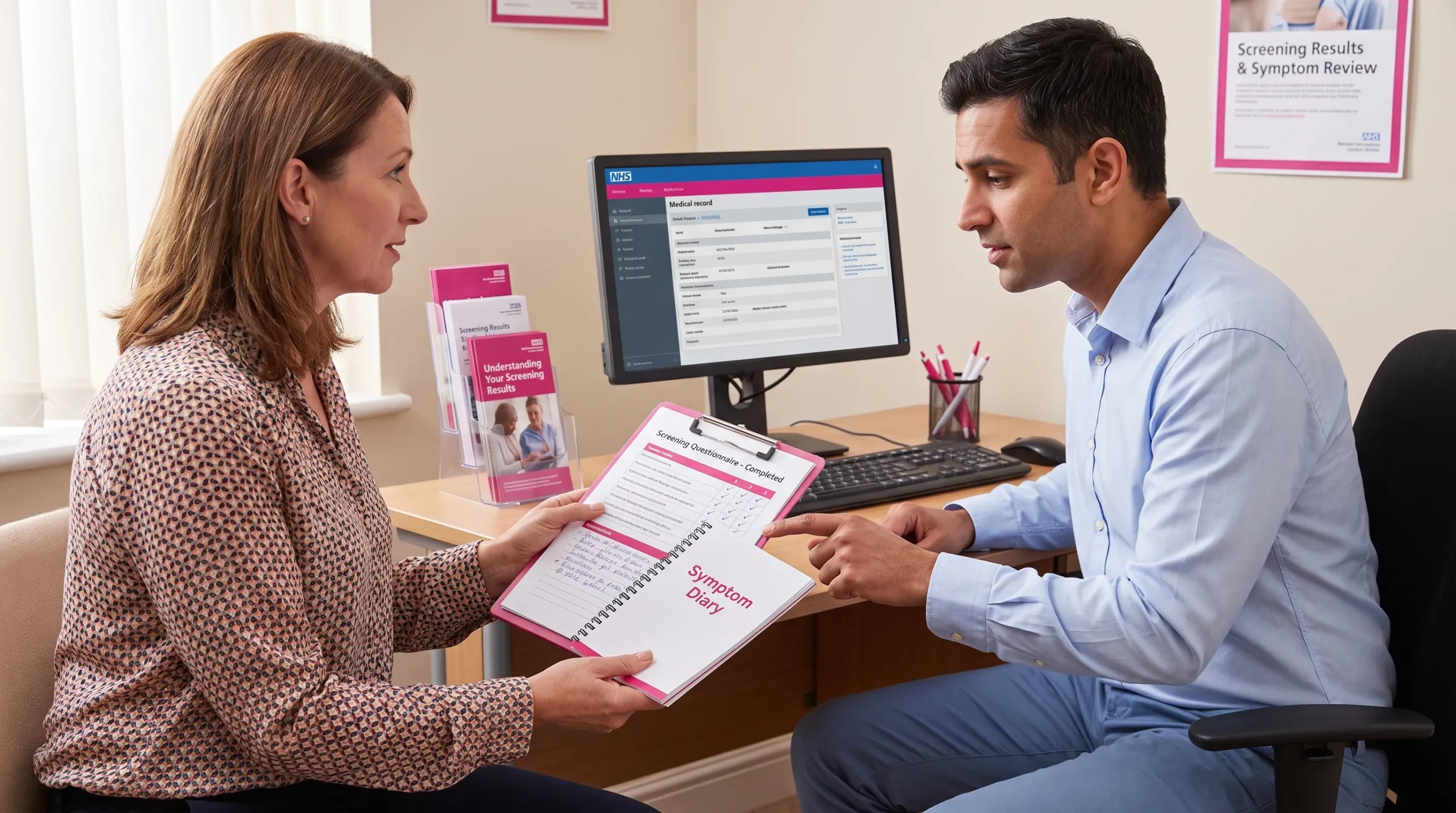
An adult shows a GP a completed screening questionnaire and symptom diary during a consultation about how the results relate to ongoing symptoms.

Get more value from a self-assessment

Answer for the time period stated in the instructions. If the questions cover the past two weeks, do not answer only for today or for the worst period you can remember. Choose the response closest to your actual experience, rather than the answer you think you should give.

Understanding the wording matters too. In education, study questions that reveal gaps in understanding illustrate the difference between recognising something familiar and examining it properly. The useful parallel is careful self-reflection, not clinical validity: a health questionnaire needs evidence that it measures its intended symptoms or risks.

Before relying on screening tools, check whether the provider explains their purpose, evidence, limitations and recommended next steps. Read its privacy information before entering sensitive health details. A professional-looking results page is not, by itself, proof of accuracy or confidentiality.

If you repeat an assessment, use the same questionnaire under reasonably similar circumstances. Changes can help structure a review, but a small score difference may reflect ordinary variation. Repeatedly retaking quizzes for reassurance can also become unhelpful, especially if it increases anxiety rather than informing action.

Turn your result into a useful GP conversation

Save the name of the questionnaire, the date, your score and any answers that concerned you. Add a brief account of when symptoms began, how often they occur and how they affect sleep, work, relationships or everyday tasks.

Mention medicines, supplements, recent illness and major changes in your circumstances. Physical and emotional symptoms can overlap, so it helps to understand how physical and mental health affect each other rather than assuming every symptom has the same explanation.

You could begin an appointment by saying: “I completed this questionnaire because I have been struggling with these symptoms. Could we discuss what might explain them and whether I need further assessment?”

That approach puts screening tools in their proper role: supporting a clearer account of your experience. A clinician may recommend monitoring, another assessment, investigations or treatment, depending on the wider picture. You do not need to arrive with a diagnosis already decided.

When not to wait for a test result

Do not complete an online questionnaire instead of seeking urgent help for severe or rapidly worsening symptoms. Call 999 or attend A&E for a life-threatening emergency, including immediate danger from self-harm, severe breathing difficulty or signs of a stroke.

For urgent mental health support that is not an immediate emergency, use your local NHS urgent mental health service. In England, you can call NHS 111 and select the mental health option. Routes elsewhere in the UK vary, so use your local NHS service or urgent GP support.

A reassuring score should never delay care when you feel unsafe or seriously unwell.

References

Frequently asked questions

Can an online health quiz diagnose a condition? No. It may identify symptoms or risks worth discussing, but diagnosis usually requires clinical assessment. Some conditions also need examination findings, blood tests or other investigations.

Are screening tools accurate? Their accuracy varies by instrument, purpose and population. Even well-validated questionnaires produce false positives and false negatives. Check the supporting evidence and use the result alongside your symptoms, not instead of them.

What is the difference between PHQ-9 and GAD-7? PHQ-9 assesses depressive symptoms, while GAD-7 assesses anxiety symptoms. Both ask about the previous two weeks, but they measure different experiences and have different scoring ranges.

Should I see a GP if my result is low but I still feel unwell? Yes, if symptoms persist, worsen or affect daily life. A low score does not invalidate your experience or rule out a condition that the questionnaire was not designed to detect.

Take a practical next step with HealthTest

Explore HealthTest’s free health self-assessment quizzes for a structured starting point and immediate results. Use them to prepare questions, not to replace medical advice.

If you have questions about using the website or its quizzes, contact the HealthTest team. For advice about symptoms, diagnosis or treatment, speak to your GP or another appropriate healthcare professional.

Two adults talk while walking in a park, with a glucose sensor visible as they discuss living with diabetes.

How Diabetes Can Affect Mental Health and What Helps

Finding the right diabetes mental health support can help when the daily work of managing your condition starts affecting your mood, sleep or relationships. Checking glucose, planning meals, taking medication and worrying about complications can become exhausting, whether you have type 1 or type 2 diabetes.

Feeling overwhelmed does not mean you have failed at diabetes care. Emotional difficulties deserve attention alongside physical symptoms. Understanding whether you are experiencing diabetes distress, burnout, depression or changes linked to blood glucose can help you get the right support.

Why diabetes can affect your mood

Diabetes brings decisions that other people rarely see: adjusting plans around meals, carrying hypo treatments, interpreting readings and deciding how much to explain to friends or colleagues. Costs, work pressures and disrupted sleep can add to that load.

The relationship also works in the other direction. Depression can make it harder to organise prescriptions, eat regularly or attend appointments. Anxiety may lead to repeated checking or avoiding activities because you fear a hypo. These are reasons to adapt your care, not blame yourself.

The US Centers for Disease Control and Prevention (CDC) reports that people with diabetes are two to three times more likely to have depression than people without diabetes. This population-level estimate does not mean depression is inevitable for any individual. [1]

Both types of diabetes can affect emotional wellbeing. Type 1 often involves intensive insulin decisions, while people with type 2 may face treatment changes, stigma or unfair assumptions about how their condition developed.

What diabetes mental health difficulties can look like

Several experiences can overlap, but they do not all need the same response.

Experience What you might notice A useful next step
Diabetes distress Worry, frustration or guilt specifically about diabetes and its treatment Ask your diabetes team which parts of care could be made easier
Diabetes burnout Feeling exhausted by diabetes, disengaging or struggling to keep up with essential tasks Arrange a review focused on workload and practical support
Depression Persistent low mood, loss of enjoyment, hopelessness or changes in sleep and appetite Speak to your GP about assessment and treatment
Anxiety Ongoing fear, panic, repeated checking or avoidance, including fear of hypos Discuss both emotional symptoms and any genuine glucose-related risks

Diabetes distress is common. The CDC reports that 33% to 50% of people with diabetes experience it during any 18-month period. Distress is not automatically a depressive disorder, although the two can occur together. [1]

The NHS describes depression as “more than simply feeling unhappy or fed up for a few days”. [2] Low mood or loss of interest lasting around two weeks warrants a conversation with your GP, especially if daily life is becoming difficult. Seek help sooner if symptoms are severe.

Recognising diabetes burnout

Burnout is an informal term for feeling worn down by the relentless demands of diabetes. You may stop looking at readings, delay appointments or feel unable to face another decision. It is not a separate medical diagnosis, but the difficulties behind it are real.

Good diabetes mental health support addresses that workload rather than simply asking you to try harder. For example, your team could review whether your monitoring schedule, education needs or treatment arrangements are making care unnecessarily difficult.

Try describing the specific task you cannot sustain: “I am overwhelmed by overnight alarms” is more actionable than “I am bad at managing diabetes”. If you use a glucose sensor, ask your team to review alarms safely rather than switching off important alerts yourself.

Do not stop insulin to take a break from diabetes. If you are missing doses or struggling to take essential medication, contact your diabetes team promptly. A safer plan needs to be agreed with someone who understands your treatment.

Can blood glucose changes cause mood swings?

Yes. Low blood glucose, or hypoglycaemia, can cause irritability, anxiety, confusion and changes in behaviour. High glucose can leave you tired, thirsty or uncomfortable, which may also affect your mood. Type 1 diabetes does not inevitably cause mood swings, but glucose changes and treatment demands can contribute.

If you take insulin or another medicine that can cause hypos, check your glucose when sudden symptoms appear, if possible. A reading below 4 mmol/L needs prompt treatment. If you are awake and able to swallow, follow your hypo plan, using fast-acting carbohydrate and rechecking after 10 to 15 minutes. [3]

However, persistent sadness, hopelessness or anxiety should not be dismissed as “just your sugars”. When seeking diabetes mental health support, describe both your emotional symptoms and any pattern in glucose readings.

Stress hormones can also influence glucose, while disturbed sleep can worsen both mood and diabetes management. This overview of how hormones can influence mood offers wider background, but symptoms alone cannot establish a hormonal cause. Your GP can assess whether other physical factors, such as thyroid problems, need investigation.

What helps with distress, depression and anxiety?

Make diabetes care more manageable

Start with the part of your routine that is causing the most strain. That might be remembering medication, managing meals at work or worrying about overnight hypos. Ask your diabetes nurse, GP or specialist team for a review focused on that problem.

Useful diabetes mental health care combines emotional support with practical changes. Depending on your circumstances, this could involve structured diabetes education, a medication review, help understanding sensor information or advice from a diabetes dietitian. Technology can reduce some burdens but create others, so discuss how it actually affects your day.

Choose one achievable change rather than redesigning your whole routine. For example, ask a trusted person to help collect prescriptions or prepare questions for your next appointment.

A glucose reading is information, not a judgement of your character. Your team can help you interpret patterns without turning each result into a personal success or failure.

Treat depression and anxiety alongside diabetes

Treatment should reflect your symptoms, preferences and circumstances. Options may include cognitive behavioural therapy (CBT), other psychological therapies, medication or a combination. Diabetes-specific psychological support may be available through your care team, although local provision varies.

In England, adults can often self-refer to NHS Talking Therapies for anxiety and depression without a GP referral. Elsewhere in the UK, ask your GP about the local route into psychological support. Tell the service that you have diabetes so treatment can account for issues such as fear of hypos or the demands of self-management. [5]

If antidepressants are suggested, discuss your other medicines and any effects on appetite, weight or glucose. Do not stop prescribed treatment without advice.

The NHS states: “With the right treatment and support, most people with depression can make a full recovery.” [2] Recovery varies, but having diabetes does not put effective depression treatment out of reach.

You do not need to wait until diabetes mental health difficulties become a crisis before asking for help. Diabetes distress also deserves support even when you do not meet the criteria for depression.

Protect sleep and choose supportive company

Frequent overnight alarms, worry about hypos and depression can all disturb sleep. Tell your diabetes team if this is happening rather than assuming you must tolerate it. Recurrent night-time hypos need a clinical review, not just sleep advice.

Regular meals, a realistic sleep routine and movement you enjoy can support wellbeing, but they are not substitutes for treatment. If you use insulin or medicines that can cause hypos, follow your team's advice about glucose monitoring and activity.

Peer support can reduce isolation. Look for a moderated diabetes group where people share experiences without encouraging unsafe treatment changes or promising cures.

Family and friends can help most by asking what you need. “Would you like company at your appointment?” is usually more useful than commenting on every meal or reading. You remain entitled to privacy and a say in how others get involved.

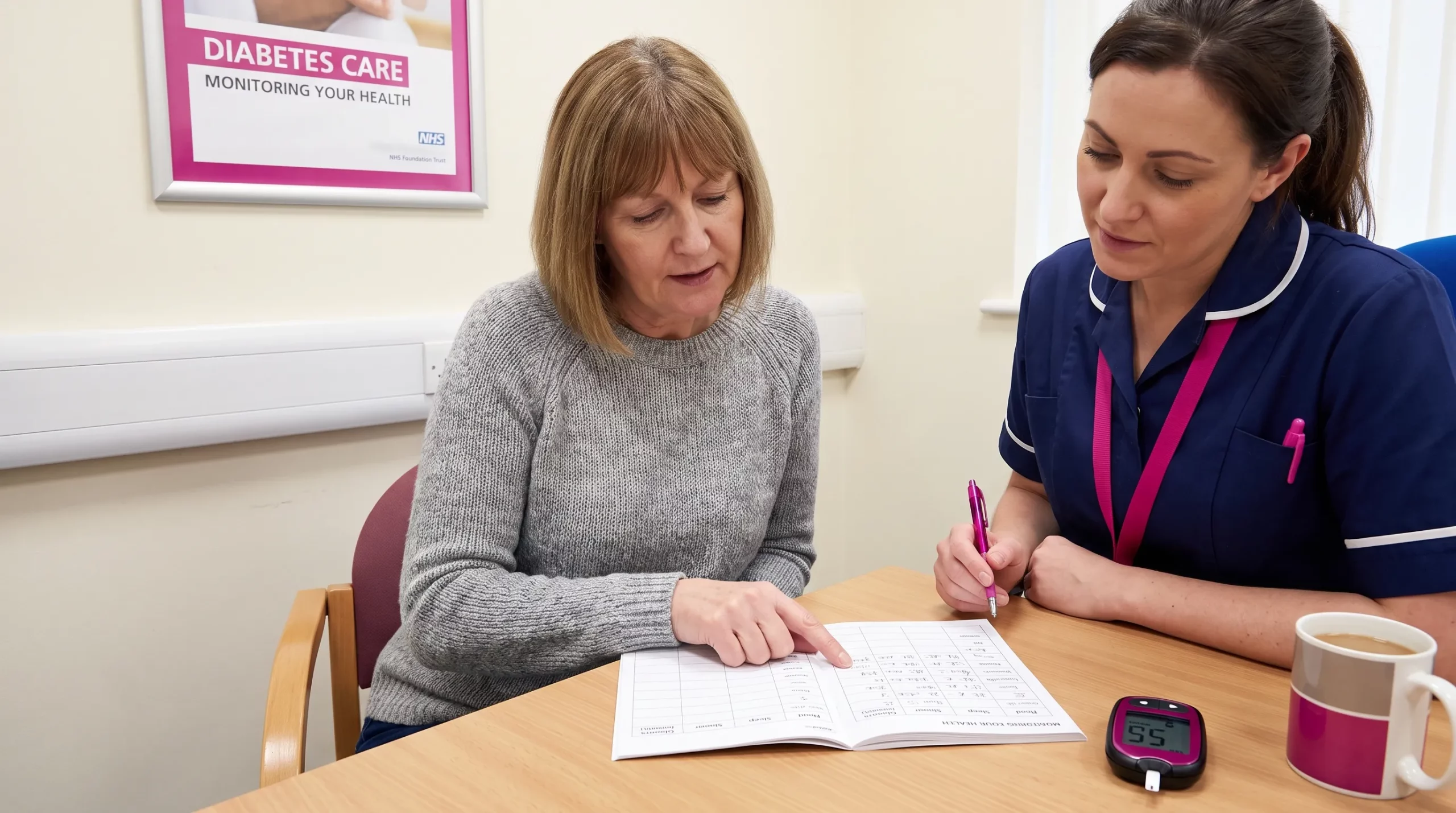
A patient and diabetes nurse sit together in a clinic consultation, reviewing a paper diary of mood, sleep and glucose patterns beside a glucose meter.

What to discuss with your GP or diabetes team

You can begin with: “Managing diabetes is affecting my mental health, and I need help with both.” You do not need a perfect explanation or a completed questionnaire before booking.

A short record can make the appointment more useful. Note when symptoms started, how they affect daily life and whether they coincide with glucose changes. Avoid intensive tracking if it makes you more anxious.

Consider mentioning:

  • Changes in mood, enjoyment, sleep, appetite or concentration.
  • Fear of hypos, repeated checking or avoidance of exercise, work or social plans.
  • Missed medication, difficulties obtaining supplies or feeling unable to follow your care plan.
  • Concerns about food, body image or deliberately reducing insulin to influence weight.

Ask who will coordinate your diabetes mental health care and when you will review progress. A referral is easier to follow through when you know what happens next and whom to contact if symptoms worsen.

If you are unsure how to describe persistent symptoms, our guide to recognising mental health problems and finding support explains how duration, severity and effects on daily life can guide that conversation.

When you need urgent help

Do not wait for a routine appointment if you cannot keep yourself safe. Call 999 or go to A&E if you are in immediate danger, have seriously harmed yourself or may act on suicidal thoughts. For someone to talk to, Samaritans is available free on 116 123, but it does not replace emergency care.

For urgent mental health support that is not an immediate emergency, contact your GP urgently or your local NHS crisis service. In England, you can call NHS 111 and select the mental health option.

Some apparent mood or behaviour changes are medical emergencies. Call 999 if someone with suspected severe hypoglycaemia is unconscious, having a seizure or not responding normally. Do not give food or drink to an unconscious person.

Vomiting, tummy pain, deep breathing or marked drowsiness can indicate diabetic ketoacidosis, especially alongside high glucose or raised ketones. Seek emergency assessment for suspected ketoacidosis.

Tell your diabetes team urgently if you are deliberately omitting insulin, particularly to influence weight. This can become dangerous quickly and needs specialist support, not judgement. Routine diabetes mental health screening is not a substitute for urgent assessment in any of these situations.

Frequently asked questions

Can diabetes cause depression? Diabetes is associated with a higher risk of depression, but there is no single explanation. Daily treatment demands, disrupted sleep, physical symptoms and other life pressures can contribute. Depression also occurs independently of diabetes and deserves its own assessment.

How do you deal with depression when you have diabetes? Ask your GP to assess your mood while involving your diabetes team in any self-management difficulties. Psychological therapy, medication when appropriate and practical adjustments can work together. Avoid relying on lifestyle changes alone when symptoms are persistent or severe.

What is T1D burnout? T1D burnout describes feeling exhausted or disengaged from managing type 1 diabetes. It may involve avoiding readings or appointments. Ask for diabetes mental health support and a manageable care plan rather than stopping insulin or trying to cope alone.

Can an online quiz tell whether I have depression or diabetes? No. A screening quiz can highlight possible symptoms and help you prepare for a conversation, but it cannot establish a diagnosis. Diabetes diagnosis requires appropriate clinical testing, while depression needs a clinical assessment. A reassuring quiz result should not override persistent symptoms.

References

Take a first step towards support

If you want help putting your concerns into words, HealthTest's free online health screening quizzes offer private self-assessment and immediate results to help guide next steps. They do not diagnose conditions or replace advice from your GP or diabetes team.

Use any results as a conversation starter about diabetes mental health, not a reason to delay care. For questions about the website or its quizzes, contact HealthTest. For medical advice, worsening symptoms or urgent concerns, contact the appropriate healthcare service directly.

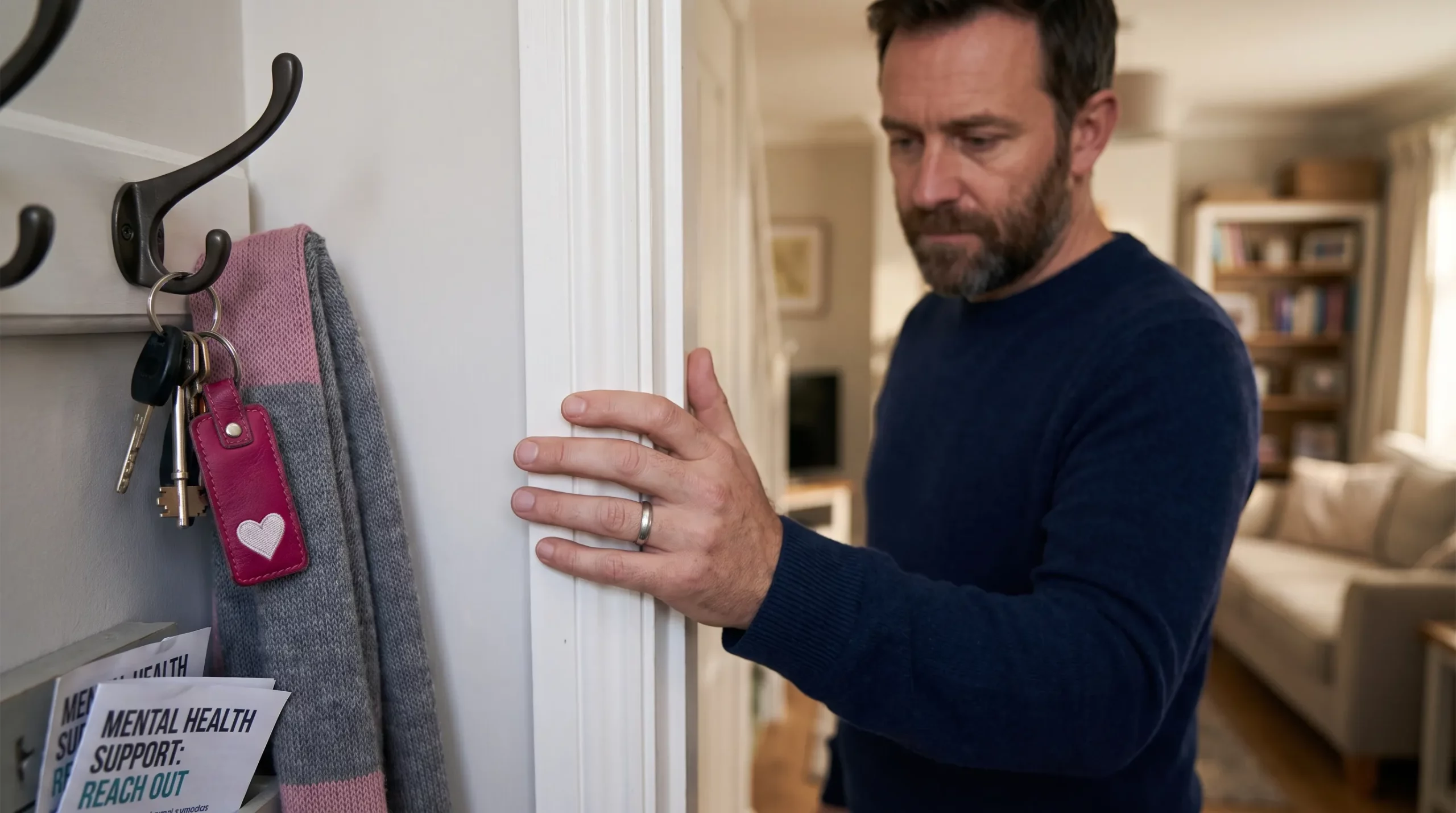
A man pauses in a home hallway before joining someone in the living room for a conversation about his mental health.

Why Men and Mental Health Deserve More Open Conversations

Talking about men and mental health should not require a crisis, a diagnosis or the courage to deliver a carefully prepared speech. Sometimes it starts with admitting that sleep has become difficult, work feels overwhelming or keeping up appearances is exhausting.

More open conversations can make those experiences easier to share and create a route towards support. The aim is not to make every man talk in the same way. It is to make honesty feel less risky, whether someone prefers a quiet conversation, a written message or an appointment with their GP.

Why silence deserves attention, not blame

The Office for National Statistics recorded 6,069 suicides in England and Wales in 2023, with males accounting for 74.2%. These are registered deaths, not necessarily deaths that occurred during that year. The figures show a serious inequality, but they do not explain any individual's circumstances or mean that distress always leads to suicide.

Silence is not simply a personal choice. Someone may fear being judged, worry about their job or have grown up hearing that men should handle problems alone. Previous experiences of being dismissed can also make another conversation harder to attempt.

Blaming men for not opening up misses these barriers. A better response is to make support easier to approach and take concerns seriously when they are shared. As the NHS puts it in its guidance on depression, “Depression is not a sign of weakness”.

What open conversations about men and mental health can change

A supportive conversation can help someone put a name to what has been happening. “I'm angry all the time” may lead to a discussion about pressure, poor sleep or low mood. “I can't face another day at work” may reveal a problem that deserves professional attention.

That does not mean friends should interpret every difficulty as an illness. Irritability, withdrawal and increased drinking can have different explanations. What matters is a change from someone's usual behaviour, how long it lasts and its effect on daily life.

Men also have different experiences. Age, disability, sexuality, ethnicity, finances and family responsibilities can affect both distress and access to care. There is no single male way of struggling or asking for help.

In the WHO's announcement of its 2022 World Mental Health Report, Director-General Dr Tedros Adhanom Ghebreyesus said: “Everyone's life touches someone with a mental health condition. Good mental health translates to good physical health”. Conversations about men and mental health belong within ordinary healthcare, not outside it.

How to start a conversation without applying pressure

Choose a small, specific opening

A private setting and an unhurried moment usually work better than a public confrontation. Some people find it easier to talk while walking or doing something familiar, rather than sitting face to face.

Describe what you have noticed without deciding what it means: “You haven't seemed yourself lately, and you've cancelled a few things. How are you doing?” That leaves space for an answer without attaching a diagnosis.

If you are the person struggling, you do not need a complete explanation. “I'm finding things harder than usual” or “Could you listen for a few minutes?” is enough to begin. A text message can be a useful first step if speaking feels too difficult.

Listen before trying to fix the problem

Let the person finish. Reflect back what you have heard and ask what would help: “That sounds exhausting. Would you like me to listen, or help you think about what to do next?”

Avoid comparing their experience with someone else's, demanding a reason or immediately prescribing exercise, gratitude or a holiday. Those responses can close down a conversation even when they are well meant.

A useful response to men and mental health concerns is to recognise the distress without pretending to know its cause: “I'm glad you told me. You don't have to work this out on your own.” You can be supportive without being a clinician or having all the answers.

Offer choices and follow up

Someone may not want to say much during the first conversation. Unless there is an immediate safety concern, leave room for that: “We don't have to talk now. I'll check in again tomorrow.”

Make practical offers rather than vague promises. You could help write down symptoms, sit with them while they arrange an appointment or accompany them if they want support. Ask permission before involving other people, unless urgent safety concerns mean help is needed immediately.

Follow-up matters because one conversation rarely resolves the underlying problem. A brief message a few days later can show that your concern was genuine, without turning every interaction into an assessment.

Make conversations part of whole-person care

Mental distress does not always arrive with recognisable emotional language. Someone may first mention persistent tiredness, headaches, pain or trouble sleeping. A GP can assess physical and mental health together rather than assuming one explanation.

Our guide to how physical health and mental health affect each other explains this relationship in more detail. When discussing men and mental health, asking about everyday difficulties can be more useful than insisting someone identify an emotion immediately.

Anxiety can also make routine healthcare harder to access. Dental anxiety, for example, is worth mentioning when arranging an appointment rather than hiding it until treatment begins. For readers in Melbourne, Australia's East Melbourne Dental Group provides general dentistry and lists sleep dentistry among its services. A dental clinician can explain whether an option is suitable, including its risks and alternatives; it is not a substitute for mental health treatment.

The broader point is simple: explaining what makes an appointment difficult gives a healthcare professional a chance to discuss appropriate support.

Two adult male friends walk side by side along a leafy park path, talking quietly about how one of them has been feeling.

Make openness normal at home and at work

People notice how others respond to vulnerability. Jokes about someone being weak, gossip about a colleague's absence or praise for working through exhaustion can discourage disclosure, even where wellbeing is discussed openly.

At home, make room for ordinary check-ins that are not tied to achievement. Asking about someone's week can include relationships, worries and rest, not just work or responsibilities. Respect their privacy and do not turn something shared in confidence into family news.

At work, managers should explain available support and the limits of confidentiality. A wellbeing conversation should not require an employee to disclose a diagnosis. Predictable workloads, fair treatment and responding constructively to concerns matter alongside signposting.

More open discussion of men and mental health is useful only if the response is respectful. Encouraging honesty while penalising it sends the opposite message.

Move from conversation to appropriate support

A conversation is a starting point, not a treatment plan. If changes persist, worsen or interfere with work, relationships or basic daily tasks, suggest a GP appointment. There is no need to wait until someone reaches a crisis or meets a self-imposed threshold of being “ill enough”.

It can help to record when symptoms began, changes in sleep or appetite, alcohol or drug use and any effects on daily functioning. Our guide to recognising mental disorders and finding the right support explains how to prepare for that discussion without attempting to diagnose yourself.

In England, adults can often self-refer to NHS Talking Therapies for anxiety and depression. Eligibility and local arrangements vary, and routes elsewhere in the UK differ. A GP can help identify suitable services.

Online screening can also help someone organise their concerns. HealthTest's free quizzes provide immediate results intended to guide next steps. For men and mental health concerns, screening is a prompt for further discussion, not a diagnosis or confirmation that nothing is wrong. Seek help for concerning symptoms regardless of a quiz result.

If you are worried about suicide or immediate safety

Ask directly and calmly: “Are you thinking about suicide?” Samaritans advises that asking about suicide can give someone permission to tell you how they feel; it does not put the idea into their head.

Call 999 or go to A&E if someone's life is at risk, they have seriously harmed themselves or they cannot stay safe. Stay with them if it is safe to do so while help is arranged. Do not promise to keep an immediate danger secret.

For urgent mental health help that is not an immediate emergency, people in England can call NHS 111 and select the mental health option. Elsewhere in the UK, use the local NHS urgent mental health route.

Samaritans is available free on 116 123, day or night, across the UK and Republic of Ireland. You do not have to be suicidal to call.

Frequently asked questions

Why can some men find it difficult to discuss mental health? Fear of judgement, expectations of self-reliance, concerns about privacy and previous dismissive responses can all play a part. These barriers are not universal. Ask what would make talking or accessing support easier for the individual rather than assuming why they are reluctant.

Can depression in men look like anger or withdrawal? Irritability, withdrawal, poor sleep and increased alcohol use can occur alongside depression, but none proves a diagnosis. Depression can also involve low mood, loss of interest and hopelessness. Persistent changes deserve assessment rather than assumptions based on gender.

What if someone says they are fine? Respect their answer while leaving the door open. You can say what you have noticed and offer to check in again. Conversations about men and mental health should invite honesty, not demand disclosure. If you believe there is an immediate safety risk, seek urgent help instead of relying on reassurance alone.

Can a friend or partner replace professional support? No. Listening and practical help can make accessing care easier, but you should not become someone's only source of support. You can set boundaries and seek advice yourself if supporting them is affecting your wellbeing.

References

Take a manageable first step with HealthTest

If you are unsure how to describe what has changed, a free HealthTest screening quiz can help you reflect on possible symptoms before speaking with a healthcare professional. You do not need a particular score to deserve support.

For questions about HealthTest's quizzes, visit our contact page. The contact page is not a route for urgent medical help. Opening up can begin with one sentence; appropriate care can help you decide what follows.

Adults wait at a GP surgery, a place to discuss physical symptoms alongside changes in mood and wellbeing.

How Physical Health and Mental Health Affect Each Other

Your physical health and mental health affect each other through sleep, stress responses, pain, daily routines and access to care. Anxiety can bring real bodily symptoms, while a long-term illness can change your mood, confidence and relationships. Understanding these connections can help you seek support without assuming that every physical symptom is psychological or that feeling low is an unavoidable part of being unwell.

The relationship is not a simple equation. You can have good mental wellbeing while living with a physical illness, and someone who appears physically fit can still experience depression. The useful question is how changes in one area might be affecting the other, and what would help interrupt that cycle.

Why the connection works in both directions

The brain is part of the body. Your nervous system, hormones and immune system help regulate how you respond to challenges, recover from illness and experience discomfort. Thoughts and emotions also influence everyday activities such as eating, sleeping, moving and attending appointments.

In the other direction, pain, disrupted sleep, reduced mobility or changes in physical functioning can make it harder to concentrate, enjoy activities or feel secure about the future. Financial pressures and difficulty accessing treatment can add to that burden.

Speaking about the World Health Organization’s 2022 World Mental Health Report, WHO Director-General Dr Tedros Adhanom Ghebreyesus said: “Good mental health translates to good physical health.” This describes an important connection, not a promise that emotional wellbeing prevents illness.

Looking at physical health and mental health together helps explain why treating only one part of a problem may leave other symptoms unresolved. For example, pain relief may help someone sleep, while psychological support may help them manage the distress associated with ongoing pain.

How mental health can affect the body

Stress, sleep and physical symptoms

When you feel threatened or under pressure, your body activates a stress response. Your heart may beat faster, muscles may tighten and digestion may change. Short-lived responses can be useful, but repeated stress can leave you feeling tense, exhausted or unable to switch off.

Anxiety can involve palpitations, sweating, nausea, dizziness or breathlessness. These symptoms are real, even when anxiety contributes to them. However, similar symptoms can have physical causes, so new, persistent or severe symptoms should not automatically be labelled as anxiety.

Sleep often becomes part of the cycle. Worry can keep you awake, while poor sleep can make emotions harder to regulate and discomfort harder to tolerate. Addressing sleep may help, but persistent insomnia deserves assessment rather than repeated advice to simply relax.

Energy, self-care and access to treatment

Depression can reduce motivation, concentration and energy. Tasks such as preparing food, collecting prescriptions or booking an appointment may become difficult. This is not a character flaw or evidence that someone does not care about their health.

Physical health and mental health can become linked through these practical barriers: missed treatment may worsen physical symptoms, which can increase distress and make the next task feel even harder.

Some mental health medicines can also affect appetite, weight, sleep or metabolism. Effects differ between medicines and individuals. If you notice changes after starting treatment, ask your prescriber about side effects and any monitoring you need. Do not stop prescribed medication without advice.

How physical illness can affect mental wellbeing

Pain and long-term conditions

Living with diabetes, arthritis, heart disease or another long-term condition can involve much more than managing symptoms. Appointments, uncertainty, pain, changes at work and the loss of familiar activities can all affect emotional wellbeing.

The Mental Health Foundation reports that one in three people with a long-term physical health condition also has a mental health problem, most commonly depression or anxiety. This does not mean that everyone with a long-term condition will become mentally unwell, but it shows why emotional support belongs within physical healthcare.

NICE’s clinical guidance on depression in adults with a chronic physical health problem advises clinicians to “Be alert to possible depression”, particularly where a physical condition causes functional difficulties.

When physical health and mental health are both affected, support should address the illness and its emotional impact. Our guide to why physical health matters for long-term wellbeing explores the wider role of mobility, independence and everyday functioning.

Weight, hormones and stigma

Changes in weight or body shape can affect mood, particularly when someone experiences judgement or discrimination. At the same time, stress, disrupted sleep and certain medicines may influence appetite or eating patterns.

Weight is not simply a measure of willpower. Genetics, biology, environment and access to support all matter. Healthy Weight Clinics’ explanation of the biological and environmental factors behind being overweight offers useful context for understanding why blame is unhelpful and care should be individualised.

Some physical conditions can also resemble or contribute to mental health symptoms. Thyroid problems, for example, may affect mood and energy. A GP can consider your symptoms, medical history and whether examinations or blood tests are appropriate.

A joined-up approach does not mean assuming weight or hormones explain everything. It means considering relevant possibilities without overlooking distress or dismissing physical symptoms.

Signs that deserve a joined-up assessment

A single symptom rarely tells the whole story. Patterns, timing and effects on daily life are often more useful than deciding whether a problem belongs to the body or the mind.

Consider booking a GP appointment if changes in physical health and mental health persist, worsen or interfere with your usual activities. Seek help sooner if symptoms are severe or you are struggling to cope.

Pattern you notice What to discuss with your GP
Fatigue alongside low mood or loss of interest Sleep, mood, medicines and possible physical causes
Ongoing pain with worry or withdrawal Pain management, emotional support and effects on daily life
Palpitations or stomach symptoms during stressful periods The symptom pattern and whether physical assessment is needed
Appetite or weight changes after starting medication Possible side effects and appropriate monitoring
Increasing difficulty managing a long-term condition Practical barriers, treatment burden and mental wellbeing

These patterns are prompts for a conversation, not diagnoses. If low mood or loss of interest lasts for two weeks or more, speak to a GP. You do not need to wait two weeks if you feel unsafe, symptoms are severe or daily life is becoming unmanageable.

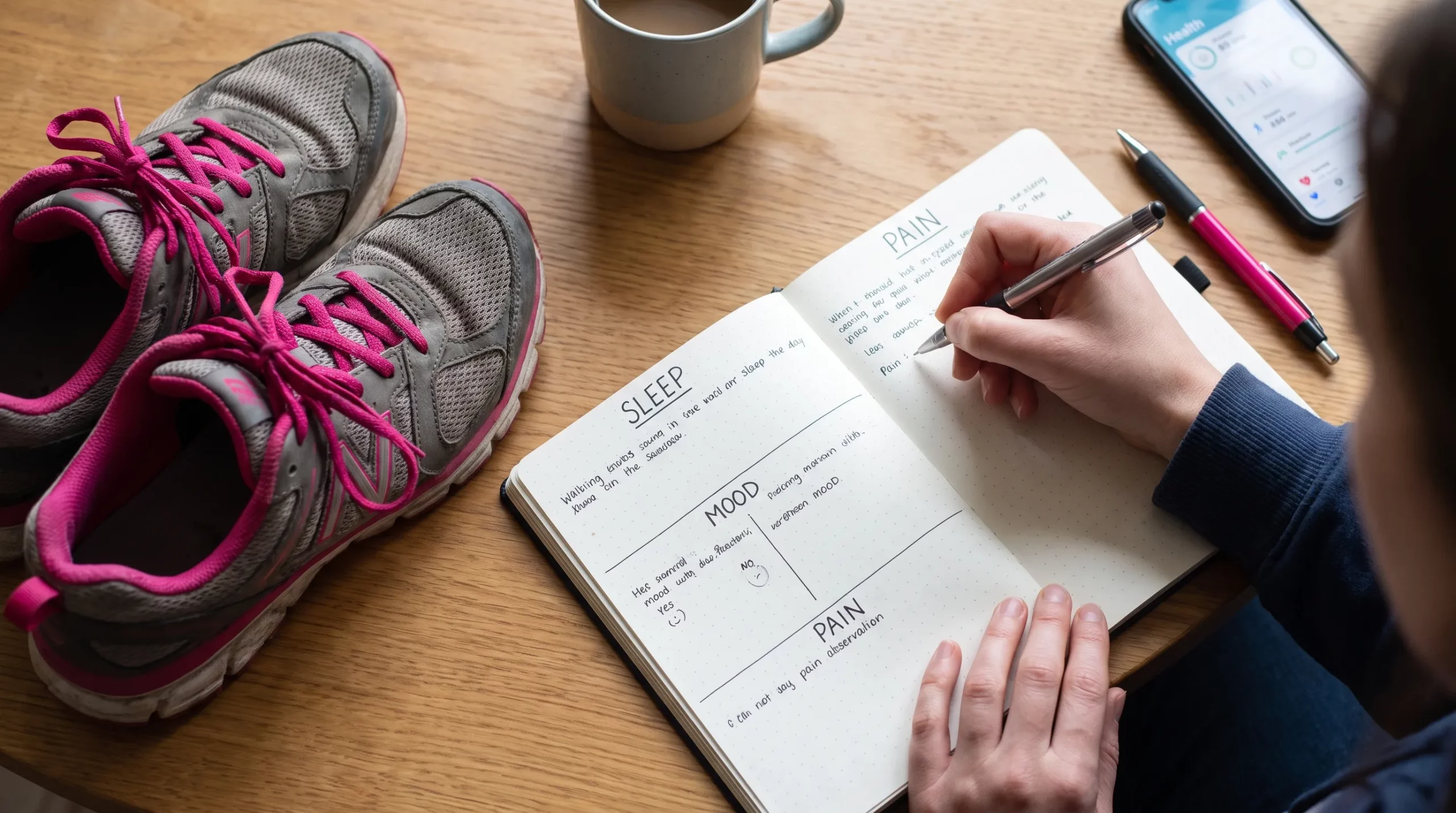
A person writes sleep, mood and pain notes in a paper diary beside walking shoes, keeping track of changes in physical and mental health.

Supporting physical health and mental health together

Choose manageable changes, not a complete overhaul

When you are tired or distressed, a long list of health goals can create more pressure. Start with one change that fits your situation, such as a consistent waking time, a short accessible activity or help collecting a prescription.

Movement can support mood, sleep and physical functioning, but it should match your abilities and medical advice. Walking, seated exercises, gardening or physiotherapy exercises may be more appropriate than a demanding workout.

WHO estimates that 31% of adults worldwide did not meet recommended physical activity levels in 2022. That figure describes a population-level gap, not an individual failure. Disability, pain, caring responsibilities and unsafe environments can make activity difficult.

If movement increases symptoms significantly, ask for advice rather than pushing through. Rehabilitation or condition-specific support may be more useful than a general exercise target.

Protect the routines that make care possible

Regular meals, adequate rest and supportive relationships can make treatment easier to manage. They are foundations for wellbeing, not substitutes for medical or psychological care.

Alcohol may seem to offer short-term relief from stress, but it can disrupt sleep and worsen mood. If drinking has become a coping strategy, discuss it with your GP without waiting for the situation to become a crisis.

Small adjustments work best when they reduce friction. Preparing an easy meal, setting a medication reminder or asking someone to accompany you to an appointment may help more than setting an ambitious target.

Our article on everyday habits that support mental health offers practical ideas you can adapt to your energy and circumstances.

Ask for care that considers the whole picture

Bring both bodily symptoms and emotional changes into the same appointment. You might say: “Since my pain worsened, I am sleeping badly and avoiding people,” or “My anxiety has increased, but these palpitations are new.”

A short record of symptoms, sleep, mood and medication changes can help you describe what is happening. You do not need to monitor every sensation or collect perfect data. If tracking increases worry, keep it brief or stop and discuss that with your clinician.

Care for physical health and mental health may involve medication reviews, treatment of an underlying condition, talking therapies, rehabilitation or practical support. The right combination depends on your circumstances. Treating emotional distress does not make a physical illness less real, and investigating physical symptoms does not invalidate a mental health diagnosis.

When to get urgent help

Do not assume severe or unfamiliar symptoms are caused by stress. Call 999 for signs of a medical emergency, such as suspected heart attack or stroke, or severe difficulty breathing.

If you or someone else is in immediate danger, including following an overdose or serious self-harm, call 999 or go to A&E.

For urgent mental health support without immediate danger, contact NHS 111 or your local urgent mental health service. In England, you can call 111 and select the mental health option. Routes vary across the UK.

You can also call Samaritans on 116 123, free at any time, to talk about distress. This listening support does not replace emergency medical care.

Frequently asked questions

Can anxiety cause physical symptoms? Yes. Anxiety can cause symptoms such as sweating, nausea, muscle tension or a racing heart. Because physical conditions can cause similar symptoms, seek assessment for symptoms that are new, persistent, severe or different from your usual pattern.

Does a physical illness always lead to depression? No. Physical health and mental health influence each other, but the relationship varies between people. Pain, uncertainty and treatment demands can increase distress, while effective treatment and support can help protect wellbeing.

Can an online health quiz diagnose the cause of my symptoms? No. A screening quiz can help you recognise possible signs and organise your concerns, but it cannot establish a diagnosis or rule out illness. Results should guide next steps, not replace a clinician’s assessment.

Should I speak to my GP about physical or mental symptoms first? Mention both. Explain which symptoms started first, what has changed and how daily life is affected. Your GP can help decide what needs assessment and whether different types of support are appropriate.

References

Take a first step with HealthTest

If you are unsure how to describe changes in your physical health and mental health, HealthTest’s free health screening quizzes can help you identify possible signs and consider your next steps. Results are immediate, but they are not a diagnosis and should not delay medical care.

For questions about using the website or its quizzes, contact HealthTest. For advice about symptoms or treatment, speak to your GP or another qualified healthcare professional.

An adult records sleep patterns and sources of stress in a journal to notice links with emotional wellbeing.

How Emotional Wellbeing Affects Sleep, Stress and Relationships

Your emotional wellbeing can affect how easily you fall asleep, how you respond to pressure and how you connect with other people. These links also work in reverse: a restless night can make everyday demands feel harder, while tension in a relationship can leave you lying awake replaying a conversation. Understanding this feedback loop helps you choose a useful next step without blaming yourself. The aim is not to feel positive all the time, but to notice when sleep, stress and relationships are putting pressure on one another.

What does emotional wellbeing mean?

Emotional wellbeing is your capacity to recognise feelings, manage difficult experiences and maintain a sense of connection and stability. It includes being able to feel sadness, frustration or worry without those emotions consistently taking over your daily life.

It is not the same as constant happiness. Grieving, feeling nervous before an appointment or becoming upset after an argument can all be understandable responses. What matters is the intensity of those feelings, how long they last and whether you have enough support to cope.

It is also different from a mental health diagnosis. You can struggle emotionally without having a diagnosed condition, and someone living with a mental health condition can still experience meaningful relationships and periods of stability. Looking after emotional wellbeing means paying attention to your needs, rather than judging yourself against an unrealistic standard.

How emotional wellbeing affects sleep

Worry and emotional tension can make it harder to settle at night. You may feel physically tired but mentally alert, checking tomorrow's tasks or revisiting something that happened earlier.

Sleep then becomes another source of pressure. Watching the clock and calculating how little rest remains can increase frustration, making it even harder to relax. This does not mean sleeplessness is your fault: sleep difficulties can also involve pain, medication, shift work or an underlying sleep disorder.

Poor sleep can change how you feel the next day

Experimental research supports the link between sleep and emotional functioning. A review reported by the American Psychological Association in 2023 examined 154 studies involving more than 5,700 participants. Sleep loss reduced positive emotions and increased anxiety symptoms, although findings for some other emotional outcomes were more mixed.

Lead author Dr Cara Palmer said extended wakefulness, shortened sleep and night-time awakenings can “adversely influence human emotional functioning”. This helps explain why you might feel less patient or more vulnerable after a disrupted night.

For emotional wellbeing, the practical point is that your reaction to a difficult day may partly reflect how rested you are. A disagreement that feels overwhelming after poor sleep might be easier to discuss when you have recovered. That does not make the disagreement unimportant; it changes the conditions in which you are trying to handle it.

Sleep matters beyond mood

The NHS says adults need 7 to 9 hours of sleep on average, although individual needs vary. Sleep quality and daytime functioning matter too, so the number of hours alone does not tell the whole story.

Rest also supports physical health. This overview of how sleep relates to immune function offers wider context on why adequate sleep matters beyond feeling refreshed.

Loud snoring, waking while gasping or marked daytime sleepiness deserve a conversation with your GP. These symptoms should not automatically be put down to stress, particularly if they persist despite allowing enough time for sleep.

Why stress can become harder to manage

Emotional wellbeing influences how much capacity you have to respond to everyday demands. When you are rested and supported, a delayed train or an unexpected bill may feel manageable. When you are exhausted or already distressed, the same event can feel like one problem too many.

The NHS describes stress as “the body's reaction to feeling threatened or under pressure”. That response can be useful in the short term, helping you react to a challenge. Problems arise when pressure continues and there is little opportunity to recover.

You might notice tense muscles, headaches, stomach discomfort or difficulty concentrating. Behaviour can change too: putting off tasks, checking messages repeatedly or withdrawing from people may bring temporary relief but leave the original pressure unresolved.

The response needs to fit the cause. A breathing exercise may help you settle before a difficult call, but it cannot resolve unaffordable bills or an unreasonable workload. Sometimes reducing stress requires practical help, changes to responsibilities or support from someone who can address the underlying problem.

How this affects relationships

Close relationships can provide reassurance, practical help and a sense of belonging. They can also become strained when poor sleep and stress reduce your ability to listen, explain yourself or tolerate uncertainty.

For example, a short reply from a partner might feel rejecting when you are already anxious. You may respond sharply, they become defensive and the conversation ends with both people feeling misunderstood. The next night, you replay the exchange rather than settling to sleep.

Emotional wellbeing can affect this pattern through both interpretation and behaviour. Feeling distressed may make you more sensitive to possible criticism, while tiredness can make it harder to pause before responding. These are possible influences, not proof that your concerns are mistaken.

Separate the feeling from the assumption

A useful distinction is between what happened, what you felt and what you assumed it meant. “You replied with one word, and I felt worried that you were annoyed” leaves room for clarification. “You never care about me” is more likely to start an argument about blame.

Timing matters too. If either person is exhausted, agree when to return to the conversation rather than trying to settle everything late at night. A pause works best when it includes a clear commitment to reconnect.

If a relationship involves fear, threats or controlling behaviour, better communication alone is not the answer. Seek confidential support and prioritise your safety rather than taking responsibility for changing the other person's behaviour.

Recognise your own feedback loop

The same difficulties can start at different points. For one person, work pressure disrupts sleep first. For another, a sleep problem reduces patience and creates tension at home. Identifying the sequence helps you choose where to intervene.

Starting point Possible knock-on effect A useful first step
Worry before bed Delayed sleep and next-day irritability Write down the concern and one daytime action
Repeated night waking Reduced concentration and patience Track the pattern and discuss persistent symptoms with your GP
Conflict at home Rumination and physical tension Agree a calmer time to revisit the issue
Ongoing work pressure Less recovery time and social withdrawal Review demands and ask for practical support

For a week, briefly note sleep quality, your main source of stress and any difficult interactions. Avoid scoring every emotion or checking constantly. The aim is to understand what affects your emotional wellbeing, not to create another task you can fail at.

Two adults talk calmly at a kitchen table in the evening, with mugs nearby, as they work through a relationship concern.

Interrupt the cycle with a targeted change

Protect sleep without making it a performance target

Choose a change that addresses your pattern. If planning tomorrow keeps you awake, move that planning earlier in the evening. If a late disagreement leaves you unsettled, agree not to begin non-urgent difficult conversations just before bed.

A reasonably consistent wake-up time and a quieter wind-down period can support sleep. Alcohol may make you feel sleepy initially but can disrupt sleep later, while caffeine can interfere with settling, especially when taken later in the day.

Supporting emotional wellbeing does not require a perfect bedtime routine. Start with one adjustment and see whether it makes mornings or evenings easier. If insomnia persists, ask your GP about suitable treatment, including cognitive behavioural therapy for insomnia, rather than relying only on general sleep tips.

Address pressure and repair connection

When demands feel overwhelming, identify what can actually change. That might mean asking someone to share a caring task, discussing priorities with a manager or getting advice about money. Recovery time helps, but it should not be used to make an unmanageable situation seem acceptable.

In relationships, explain your needs without using tiredness or stress to excuse hurtful behaviour. You might say: “I am exhausted and getting defensive. I want to talk about this properly after breakfast.”

Our guide to building mental wellbeing through small everyday actions offers ideas for fitting support into ordinary routines. Choose what suits the problem you have identified rather than trying to overhaul everything at once.

When to seek professional support

Speak to your GP if changes in emotional wellbeing persist, interfere with work or relationships, or make daily activities difficult. You do not need to wait until things become severe before asking for help.

It can help to bring a short account of what has changed: when sleep problems began, how you feel during the day and whether stress or conflict seems to trigger symptoms. Mention relevant medication, alcohol use, pain and physical symptoms as well. This gives a fuller picture than describing everything simply as “stress”.

An online screening quiz can help you organise your concerns, but it cannot diagnose a condition or rule one out. A reassuring result should not delay care if symptoms continue or you are worried.

If you might act on thoughts of harming yourself or cannot keep yourself safe, call 999 or go to A&E. For urgent mental health help that is not an emergency, contact your local NHS crisis service. In England, you can call NHS 111 and select the mental health option. Routes elsewhere in the UK vary.

Frequently asked questions

Can poor sleep cause relationship problems? Poor sleep can contribute to irritability, reduced patience and difficulty concentrating, which may make disagreements harder to handle. It is rarely the whole explanation, so address both the sleep problem and the concern within the relationship.

Does feeling stressed mean my emotional wellbeing is poor? Not necessarily. Stress is a normal response to pressure. The more useful questions are whether you can recover, whether support is available and whether the pressure is affecting sleep, health or daily life.

Will sleeping better make anxiety go away? Better sleep may help you cope, but it is not a guaranteed treatment for anxiety. Persistent or distressing symptoms deserve assessment, even if your sleep improves. Sleep support and mental health treatment may be needed together.

Can a health quiz tell me what is wrong? A screening quiz can highlight possible symptoms and suggest next steps. It cannot establish the cause or replace a clinical assessment. Use the result as a starting point for a conversation, not a final answer.

References

American Psychological Association: Sleep deprivation makes us less happy, more anxious (2023). Summary of experimental research on sleep loss and emotional functioning, including comments from Dr Cara Palmer.

NHS Every Mind Matters: Stress. Definition, symptoms and approaches to managing stress.

NHS: Insomnia. Typical sleep needs, sleep difficulties and treatment guidance.

NHS: Where to get urgent help for mental health. Guidance on urgent and emergency support.

Take the next step with HealthTest

HealthTest provides free, private screening quizzes for physical and mental health concerns, with immediate results intended to guide next steps rather than replace medical advice.

If you have questions about the website or its screening quizzes, contact HealthTest. If sleep, stress or relationship difficulties are affecting your daily life, speak to your GP as well. You do not need a quiz result before asking for support.

An adult writes one manageable task in a notepad at home, turning a broad concern into a practical next step.

Simple Ways to Build Mental Wellbeing Every Day

Building mental wellbeing does not require a perfect morning routine, constant positivity or a long list of things to improve. Often, a useful starting point is one small action that makes today feel more manageable: stepping outside, speaking to someone you trust or giving yourself a proper pause between tasks.

The aim is not to feel good all the time. It is to support your ability to cope, stay connected and recover when life becomes difficult. That looks different depending on your health, responsibilities and circumstances.

Rather than adding ten new habits at once, choose something that meets a need you have today. Then make it easy enough to repeat on an ordinary day, including one when your energy is low.

What mental wellbeing looks like in real life

Wellbeing includes how you feel, but also how you function. You might still experience sadness, frustration or worry while finding some satisfaction in daily life and feeling able to ask for help.

A useful check-in is to ask yourself three questions: What is draining me? What is helping me cope? What do I need more of today?

Your answer may be practical rather than emotional. Perhaps you need lunch before another meeting, help with childcare or a quieter evening. Not every difficult feeling needs a technique; sometimes the conditions around you need to change.

Daily habits can support you, but they cannot remove every source of distress. Financial pressure, discrimination, caring responsibilities and illness can all affect how you feel. Needing professional or practical support is not a failure of self-care.

Use the suggestions below as options, not another set of standards to meet.

Attach one small action to something you already do

A sustainable approach to mental wellbeing starts with reducing the effort needed to begin. Instead of relying on motivation, attach a manageable action to an existing part of your day.

For example, after making your first drink, stand by an open window or step outside briefly. After lunch, walk for a few minutes if you can. When you plug in your phone at night, write down one task that can wait until tomorrow.

The connection should be specific: “After I finish breakfast, I will…” is easier to act on than “I should look after myself more.”

Choose a smaller version for difficult days:

  • Usual version: Take a short walk after lunch.
  • Low-energy version: Spend a minute outdoors or beside a window.
  • Rest-day version: Pause where you are and notice what you can see and hear.

These are examples, not prescribed doses. Adapt them to your mobility, surroundings and preferences. The smaller version keeps the action available without turning it into a test of willpower.

Repeat one action for a week before deciding whether to add another. You are checking whether it fits your life, not proving that you can maintain a streak.

Choose an action that matches today's need

Different activities support different needs. For mental wellbeing, a useful question is whether you need to settle, connect or reduce the pressure you are putting on yourself.

When you feel overwhelmed, narrow your attention

If everything feels urgent, pause before trying to solve everything. Put your feet on the floor and notice a few details around you: the temperature, nearby sounds or the feel of the chair beneath you.

Then identify the next manageable task. “Open the letter” is more workable than “Sort out my finances”. “Ask for an appointment” is more concrete than “Fix my health”.

If comfortable, let your breathing slow naturally. Avoid forcing deep breaths or holding your breath. If focusing on breathing makes you more anxious, use your surroundings as the point of attention instead.

When you feel disconnected, make contact specific

A message such as “Could we have a ten-minute chat this week?” gives someone a clearer way to respond than “We should catch up sometime”. Connection might also come through a regular class, volunteering or a familiar conversation with a neighbour.

In his 2023 advisory on social connection, then US Surgeon General Dr Vivek Murthy wrote: “Loneliness is far more than just a bad feeling”. His wider message was that social connection matters for health, not simply for having a busy social calendar.

Choose contact that feels safe and supportive. You do not need to keep engaging with someone who leaves you feeling threatened or belittled.

When you feel self-critical, change the next instruction

Supporting mental wellbeing can mean replacing a harsh instruction with a useful one. Instead of “I am useless at everything”, try “I am struggling with this task and need a smaller first step”.

This is not forced positivity. It acknowledges the difficulty while making room for action, rest or help. Speaking to yourself fairly is more useful than insisting that everything is fine.

Address the physical factors affecting how you feel

Sleep disruption, pain, hunger and changes in physical health can make emotional coping harder. Rather than treating mood as separate from the rest of your body, notice whether a physical need deserves attention.

WHO Director-General Dr Tedros Adhanom Ghebreyesus put it plainly at the launch of the organisation's 2022 mental health report: “Good mental health translates to good physical health.” The relationship also gives us a reason to consider physical health when discussing emotional difficulties.

For adults aged 19 to 64, NHS guidance recommends at least 150 minutes of moderate-intensity activity a week, or 75 minutes of vigorous activity, alongside strengthening activities on at least two days. These are general health targets, not a daily pass-or-fail test. Start with activity that is suitable for you and build gradually.

During perimenopause and menopause, sleep disruption and mood changes may need more specific attention. The symptom guides at The Menopause Kit offer further reading on sleep, mood and related concerns. The site is US-focused and some product links are affiliate links, so check treatment advice and suitability with your UK GP.

HealthTest's guide to how physical health supports long-term wellbeing explores that connection in more detail.

Build a flexible daily plan, not a perfect routine

A simple mental wellbeing plan should still work when your day changes. Give yourself a few opportunities to pause, rather than scheduling every hour.

The examples below show how the same intention can have different versions. There is no need to use every row.

Moment Possible action Smaller alternative
After waking Notice your energy and choose one priority Ask yourself what can wait
During the day Take a brief movement or rest break Change position, if comfortable
Between tasks Check whether you need food, water or a pause Meet one immediate need
In the evening Speak to someone supportive Send a short message
Before bed Write down tomorrow's first task Put one reminder somewhere visible

If your schedule varies, use events rather than clock times. “After my main meal” may work better than “At 1 pm”, particularly for shift workers or carers.

Protect some unstructured time too. An activity does not have to be productive to be worthwhile. Music, reading, gardening or sitting quietly can give you a break without becoming another project to optimise.

A simple daily wellbeing plan lies open in a notebook beside tea and walking shoes by an open doorway, with the garden beyond as a possible place for a short pause or walk.

Review what helps without monitoring every feeling

Tracking mental wellbeing can be useful when it reveals a pattern, but constant checking may become another source of pressure. A brief weekly review is often more practical than repeatedly scoring your mood throughout the day.

Ask what helped, what felt difficult to maintain and whether anything needs a different kind of support. You might discover that a lunchtime break helps more than an elaborate morning routine, or that late caffeine regularly coincides with poorer sleep.

Treat these observations as clues, not proof of cause and effect. One difficult week does not mean an activity has failed, and a good day does not mean a problem has disappeared.

If recording your mood makes you more anxious or preoccupied, stop or simplify the process. You can notice patterns without keeping detailed scores.

For persistent symptoms, a short note about sleep, mood and the effect on everyday activities may help you explain things to a GP. Keep the record focused on what you want help with rather than trying to diagnose yourself.

Know when daily habits are not enough

Looking after mental wellbeing includes recognising when you need more support. WHO reported in 2022 that nearly one billion people worldwide were living with a mental disorder in 2019. That is a dated global estimate, not a measure of ordinary day-to-day stress, but it illustrates how common the need for care is.

Speak to your GP if distress persists, worsens or interferes with sleep, work, relationships or basic self-care. You do not need to wait until you reach a crisis. Changes such as increasing alcohol use, withdrawing from people or struggling to manage usual tasks are also worth discussing.

Our guide to recognising mental disorders and finding appropriate support explains how to prepare for that conversation.

If you or someone else is in immediate danger, call 999 or go to A&E. In England, call NHS 111 and select the mental health option for urgent, non-emergency support. NHS routes differ across the UK. Samaritans also offers listening support on 116 123, free at any time throughout the UK and Ireland; it is not a replacement for emergency care.

Frequently asked questions

Can I build mental wellbeing if I have very little time? Yes. Start with an action attached to something you already do, such as a brief pause after lunch or a message to someone supportive. Keep it realistic, and remember that small habits are not a substitute for addressing ongoing health or practical problems.

How quickly should I notice a difference? There is no fixed timeline. Some actions may bring short-term relief, while others need repetition before you know whether they help. Seek support rather than waiting for habits to work if symptoms are persistent or affecting daily life.

Can an online health quiz diagnose a condition? No. Screening quizzes can highlight possible signs and help you consider next steps. A result cannot confirm or rule out a condition, and concerning symptoms deserve medical advice regardless of your score.

References

  1. World Health Organization: 2022 mental health report launch, global estimates and comments from Dr Tedros.
  2. NHS: Five evidence-informed steps to support wellbeing.
  3. NHS: Physical activity guidelines for adults aged 19 to 64.
  4. US Surgeon General: 2023 advisory on loneliness, isolation and social connection.
  5. NHS: Where to get urgent help for mental health.

Take a practical next step with HealthTest

If you are unsure what changes in your mental wellbeing might mean, HealthTest offers free, private online screening quizzes with immediate results and guidance on next steps. They support self-assessment, not diagnosis, and do not replace medical advice.

For questions about HealthTest or its quizzes, contact the HealthTest team. For symptoms, treatment advice or urgent support, speak to an appropriate healthcare service.

Adult swimmers move through lanes in a community pool, showing one way regular activity can support physical health over time.

Why Physical Health Matters for Your Long-Term Wellbeing

Good physical health helps you do more than avoid illness. It supports the energy to get through your day, the strength to stay independent and the ability to keep doing things you enjoy as you get older. Looking after your body now can also reduce the likelihood of developing some long-term conditions.

That does not mean achieving a particular weight, exercising intensely or never getting ill. Your genes, environment, income and access to healthcare all influence your wellbeing. The useful starting point is understanding what you can change, what deserves medical attention and which small actions are worth maintaining.

A longer life is only part of the goal

Living longer matters, but so does how you experience those years. Being able to climb stairs, carry shopping, recover after illness or spend time with friends can make a substantial difference to everyday life.

Regular movement supports cardiovascular fitness, muscle strength and balance. A varied diet helps meet your nutritional needs, while adequate sleep supports attention and recovery. Avoiding tobacco and keeping alcohol within recommended limits also reduce preventable health risks.

The importance of prevention is clear in global activity figures. World Health Organization findings published in 2024 estimated that 31% of adults worldwide, approximately 1.8 billion people, did not meet recommended activity levels in 2022. These figures concern activity, not overall fitness or personal worth.

Commenting on the findings, WHO Director-General Dr Tedros Adhanom Ghebreyesus described insufficient activity as “a lost opportunity to reduce cancer and heart disease”.

Protecting physical health is therefore about preserving future choices as well as reducing disease risk. Stronger legs may help you remain mobile, better cardiovascular fitness can make ordinary tasks less tiring and preventive care can identify certain risks before symptoms develop.

None of these habits guarantees freedom from illness. They improve your chances of staying well without making illness a personal failure.

Your body and mind influence each other

Pain, tiredness and restricted movement can affect mood, concentration and social life. In the other direction, anxiety or low mood can make cooking, sleeping and attending appointments more difficult.

This connection does not mean that mental illness is simply a lifestyle problem. Depression, anxiety and other conditions may need professional treatment, even when someone eats well and exercises regularly.

However, supporting physical health can remove some additional pressures. For example, addressing persistent pain may make sleep easier, while manageable activity can provide structure and opportunities for social contact.

If you are struggling emotionally, the aim is not to add a demanding fitness routine to an already difficult day. A short walk, a regular meal or help arranging a GP appointment may be a more realistic first step. Our guide to everyday habits that support mental health explores these supportive routines in more detail.

Persistent fatigue, disrupted sleep or loss of motivation should not automatically be attributed to stress. A healthcare professional can help assess whether there is an underlying medical or mental health cause.

Look beyond weight and appearance

Body weight can be relevant to some health risks, but it cannot tell you everything about your wellbeing. Someone who looks fit may have raised blood pressure, while a person living with a disability or chronic condition may have effective routines that support their health.

A more useful picture combines daily function, symptoms and appropriate clinical checks.

Area to consider A practical observation When professional advice may help
Everyday movement Whether usual walking or stairs feel manageable New breathlessness or a noticeable decline in exercise tolerance
Strength and mobility Whether you can rise from a chair or carry everyday items comfortably Increasing weakness, recurrent falls or persistent joint pain
Sleep and energy Whether you usually feel rested enough for daily activities Ongoing exhaustion, loud snoring with breathing pauses or persistent insomnia
Preventive care Whether relevant invitations, vaccinations and checks are up to date Uncertainty about eligibility or a significant family history

Assessing physical health this way helps you notice meaningful changes without turning every day into a performance test. Compare your current abilities with your own usual baseline, not with someone else's body or routine.

These observations are not diagnostic tests. New or worsening symptoms deserve assessment even if your weight, activity tracker or previous check-up appears reassuring.

Build habits that protect your future

Move regularly and maintain strength

For adults aged 19 to 64, NHS activity guidance recommends at least 150 minutes of moderate-intensity activity a week, or 75 minutes of vigorous activity, alongside strengthening activities on at least two days.

Moderate activity makes you breathe faster but generally still allows conversation. Brisk walking, cycling and some forms of dancing can count. Strengthening activities might include resistance exercises, lifting weights or suitable bodyweight movements.

You do not need to reach the full recommendation immediately. Starting with a manageable amount and building gradually is more useful than repeatedly attempting a routine you cannot sustain. Breaking up long periods of sitting also creates opportunities to move throughout the day.

Supporting physical health requires both movement and recovery. Persistent pain, dizziness or unusual breathlessness are reasons to stop and seek advice, rather than push through. If you have a condition that affects activity, ask your healthcare team how to adapt exercise safely.

Older adults also benefit from activities that support balance. Someone with limited mobility may need seated exercises, adapted equipment or physiotherapy-led options rather than a standard walking plan.

Eat for nourishment, not perfection

The NHS Eatwell Guide provides a practical framework for a balanced diet. It includes fruit and vegetables, higher-fibre starchy foods, protein sources and dairy or suitable alternatives.

The overall pattern matters more than making every meal ideal. Affordable staples such as oats, beans, frozen vegetables and eggs can help, depending on your dietary needs and preferences.

Restrictive diets and supplements are not shortcuts to long-term wellbeing. If you have unexplained weight changes, persistent digestive symptoms or difficulty eating enough, speak to a healthcare professional rather than cutting out more foods without guidance.

Give sleep a place in your routine

Adults generally need around seven to nine hours of sleep, although individual needs vary. A reasonably consistent sleep schedule and time to wind down can help.

Sleep is part of physical health, not simply spare time left over after work and other commitments. Ongoing poor sleep can affect daytime function and make other healthy habits harder to maintain.

If sleep difficulties persist, or someone notices that your breathing stops and starts during sleep, arrange medical advice. Sleep problems sometimes need assessment and treatment rather than another change to your bedtime routine.

Make healthy choices achievable

Advice is only useful when it fits your circumstances. Shift work, caring responsibilities, disability, financial pressure and unsafe outdoor spaces can all make standard recommendations difficult to follow.

Dr Rüdiger Krech, WHO's Director of Health Promotion at the time of its 2024 activity report, put the wider issue plainly: “Physical inactivity is a silent threat to global health, contributing significantly to the burden of chronic diseases.” The same report called for activity to be accessible, affordable and enjoyable.

For an individual, that can mean choosing a free home routine instead of a gym membership or dividing movement into short periods between other tasks. Ask for practical support where available, including workplace adjustments, local community activities or clinical advice about adaptations.

Consistency does not require doing the same amount every day. A routine that allows for illness, pain and busy weeks is more likely to last.

An adult arranges vegetables, beans and wholegrain bread on a kitchen worktop, with walking shoes and a reusable water bottle nearby.

Make physical health checks part of prevention

Some conditions can develop without obvious symptoms. High blood pressure, for example, often causes no noticeable warning signs, so feeling well is not always a reason to skip an appropriate check.

In England, the NHS Health Check is generally offered every five years to eligible adults aged 40 to 74 who do not have certain pre-existing conditions. It assesses cardiovascular risk and can help identify areas needing further investigation or support. Arrangements elsewhere in the UK differ, so ask your GP practice about local services.

Other preventive care depends on your age, medical history and relevant national programmes. This may include vaccinations or cancer screening invitations. Screening has benefits and limitations, so use the information provided to make an informed choice.

Where online quizzes fit

Online self-assessments can help you organise concerns and recognise possible signs worth discussing. HealthTest offers free screening quizzes across several health categories, with immediate results intended to guide next steps.

A quiz cannot examine you, measure your blood pressure or confirm a diagnosis. A reassuring result does not rule out illness, and a concerning result does not establish that you have a condition.

Use results alongside your symptoms and medical history. Physical health screening is most useful when it leads to an appropriate next step, not when it replaces professional assessment.

Do not wait for a quiz result in an emergency. Call 999 for signs of a stroke or sudden, persistent chest pain, particularly with sweating or breathlessness. For urgent problems that are not life-threatening, use NHS 111 where available or your local urgent-care service.

Choose one useful next step

You do not need to overhaul your life this week. Choose one action that addresses your circumstances: book an overdue appointment, add a short walk to your lunch break or prepare a regular meal you can manage on busy days.

Make the action specific enough to repeat. “Walk for ten minutes after lunch on three days this week” is easier to act on than “get healthier”. If that is not accessible, choose an adapted activity or another relevant goal.

After a few weeks, review what changed. Consider energy, comfort, sleep or ease of everyday movement rather than appearance alone. If nothing improves, or symptoms worsen, seek advice rather than assuming you need more willpower.

The most useful physical health plan is one that combines realistic habits with timely healthcare and leaves room for your individual needs.

References

  1. World Health Organization: 2024 findings on insufficient physical activity, including statistics and expert statements.
  2. NHS: Physical activity guidelines for adults aged 19 to 64.
  3. NHS: The Eatwell Guide.
  4. NHS: Insomnia, sleep needs and when to seek help.
  5. NHS: NHS Health Check eligibility and assessment.

Frequently asked questions

Can I feel healthy and still have an underlying condition? Yes. Some conditions, including high blood pressure, may not cause obvious symptoms. Attend relevant screening and discuss your personal risk factors with your GP.

Is it too late to benefit from healthier habits? No. Starting at an older age or after a period of inactivity can still be worthwhile. Choose a manageable starting point and get advice about adaptations if needed.

Do I need a yearly full-body health check? Not everyone needs the same tests or a yearly assessment. Appropriate checks depend on your age, symptoms, medical history and screening eligibility. Your GP can advise on what is useful for you.

Can an online health test diagnose a condition? No. A screening quiz can highlight possible concerns, but diagnosis may require a consultation, examination or clinical tests. Do not use a quiz to delay care for persistent or urgent symptoms.

Get support with your next step

Understanding your physical health can start with identifying the concern you want to address. HealthTest's free quizzes can help you reflect on possible signs and prepare questions for a healthcare professional.

If you have questions about the website or using its quizzes, contact the HealthTest team. For personal medical advice, diagnosis or treatment, speak to your GP or another qualified healthcare professional.

An open book and reading glasses sit beside a made bed, ready for a quiet wind-down before sleep.

10 Everyday Habits That Support Your Mental Health

Looking after your mental health does not require a perfect morning routine or a complete lifestyle overhaul. Small actions, repeated often enough to become familiar, can support your mood, help you manage stress and make difficult days more manageable.

These habits are not cures for depression, anxiety or other conditions, and struggling to maintain them is not a personal failure. They work best as everyday support, alongside professional care when needed. The NHS five steps to wellbeing highlight connection, activity, learning, giving and paying attention to the present.

Choose one or two ideas that fit your circumstances rather than attempting all ten at once. If you have a disability, work shifts or care for someone else, adapt the habit to your available energy and time. A smaller version still counts.

1. Support your mental health with a steadier sleep routine

Sleep and mood affect each other. Worry can keep you awake, while poor sleep can make it harder to cope with everyday frustrations. A predictable routine gives your body clearer signals about when to rest.

Try getting up at roughly the same time each day and creating a short wind-down period before bed. That might mean dimming the lights, reading something undemanding or setting tomorrow’s essentials aside. Most adults need around seven to nine hours, although individual needs vary, as the NHS guidance on sleep explains.

Start small: Choose one consistent wake-up time that works for most of your week. If you work nights, aim for a repeatable sleep window around your shifts instead.

If sleep problems persist or leave you struggling during the day, speak to your GP rather than relying solely on sleep tips.

2. Build some movement into your day

Physical activity does not have to mean joining a gym or completing a demanding workout. Walking, dancing in the kitchen, gardening and adapted seated exercises can all be ways to move more.

Choose something you are willing to repeat, not something you feel you should endure. You might walk during part of your commute, stretch between tasks or take a short movement break after lunch. Start within your abilities and increase gradually if that feels appropriate.

Regular activity can support mental health, but it should not become another test you must pass. Rest days and changes of plan are normal, especially when you are unwell or exhausted.

Start small: Add five minutes of comfortable movement to an existing routine. If exercise becomes compulsive or feels like punishment for eating, seek support rather than increasing it.

3. Make regular meals easier to manage

When you are busy or feeling low, meals can become irregular. Eating enough and drinking regularly support your physical needs, which can make daily demands easier to handle. No individual food can treat a psychological condition.

Aim for manageable meals with some variety across the week. Convenience foods, frozen vegetables and simple combinations such as beans on toast can be useful when cooking feels difficult. You do not need to prepare everything from scratch.

Notice whether caffeine affects your sleep or makes you feel jittery. Alcohol may seem relaxing initially, but it can disrupt sleep and make coping more difficult. If you may be alcohol-dependent, get medical advice before stopping suddenly.

Start small: Keep one easy meal available for low-energy days. If eating is a source of distress, ask for advice tailored to you rather than introducing strict food rules.

4. Get some daylight when you can

Daylight helps your body distinguish daytime from night-time, supporting your sleep-wake rhythm. Getting outside can also provide a change of scene, particularly if you spend much of the day indoors.

You do not need access to countryside or a large park. A brief trip outside, time in a courtyard or a pause on your doorstep may be more realistic. In the darker UK months, an outdoor break during daylight hours can fit better than an evening walk.

For mental health, treat this as a gentle opportunity to reset, not a requirement to feel happier immediately. Weather, mobility and your surroundings all affect what is possible.

Start small: Spend part of a daytime break outdoors, if it is safe and accessible. If you cannot get outside, sitting near a window may offer a welcome change of view, although it is not equivalent to being outdoors.

5. Make one genuine connection

Connection is about feeling heard, not collecting social plans. A short conversation with someone you trust can be more helpful than an evening spent with people around whom you cannot relax.

Try contacting a friend, speaking to a colleague or joining a regular activity with a shared purpose. If reaching out feels awkward, make the request specific: “Could we have a quick chat this week?” or “Would you like to walk with me?”

You do not have to discuss difficult feelings every time. Ordinary conversations and shared activities can help maintain relationships, making it easier to ask for support when you need it.

Start small: Send one low-pressure message. If you feel isolated, consider a local community group, library activity or peer support service. Choose settings where you feel safe and respected rather than forcing contact that leaves you drained.

6. Practise a brief calming pause

A short pause can help you notice tension before reacting automatically. It might involve relaxing your shoulders, noticing your surroundings or taking a few gentle breaths without forcing them.

The NHS breathing exercise for stress recommends breathing comfortably and practising regularly. You can try it seated, with both feet supported, rather than waiting until you feel overwhelmed.

Breathing exercises can support mental health for some people, but focusing on the breath does not suit everyone. If it increases panic or discomfort, stop. Looking around the room, describing an object or feeling your feet against the floor may be a better option.

Start small: Take a brief pause between two everyday tasks. The aim is to create a little space to choose your next action, not to empty your mind or eliminate every uncomfortable feeling.

7. Put boundaries around digital demands

Phones can provide friendship, practical help and entertainment. They can also keep work messages, distressing news and social comparison within reach throughout the day.

Rather than treating all screen time as harmful, notice which activities leave you informed or connected and which leave you tense. A conversation with a friend is different from repeatedly checking upsetting headlines or comparing yourself with carefully edited photographs.

Set a boundary around the activity that causes the most difficulty. You could mute non-essential notifications, stop checking work messages after an agreed time or keep your phone away during one meal. Protect useful online support rather than removing it indiscriminately.

Start small: Change one notification setting or choose one phone-free moment. Keep the boundary realistic enough to repeat, and review whether it actually helps rather than judging yourself by a screen-time total.

Two friends walk together along a leafy park path in daylight, talking as they enjoy a gentle shared activity.

8. Break demanding tasks into smaller actions

When a task feels overwhelming, “sort everything out” is rarely a useful starting point. A clearly defined action is easier to begin and gives you a more realistic sense of what you have achieved.

For example, “deal with my finances” might become “open the latest bill”. “Clean the house” might become “clear one surface”. You can then decide whether to continue, pause or ask for help.

This is not about becoming endlessly productive. Smaller tasks can reduce avoidable pressure and help you manage essentials when energy or concentration is limited. Rest and asking someone to share the load may be the most useful next steps.

Start small: Pick one task and define its first practical action. If even small activities consistently feel impossible, especially alongside low mood or exhaustion, speak to your GP rather than assuming you need more willpower.

9. Keep space for something enjoyable or meaningful

Daily routines can become dominated by work, caring responsibilities and chores. Making room for an activity you value can support mental health without requiring a major achievement or a new hobby.

That activity might be listening to music, tending a plant, making something, reading or learning a small skill. It can also involve contributing to something you care about, provided it does not add more pressure than you can manage.

Choose the smallest accessible version. A few pages of a book or ten minutes with a familiar hobby may fit your day better than an ambitious project. Avoid turning leisure into another target to monitor.

Start small: Put a short, enjoyable activity beside an existing routine. If you have lost interest in most things you usually enjoy, particularly if this persists, mention it to a healthcare professional.

10. Check in with yourself without judging

A brief check-in can help you notice what you need and recognise changes over time. Ask yourself how you are feeling, what has been demanding and what might make the next part of the day easier.

You could write a sentence or two, make a short voice note or simply pause to reflect. Keep it light. Detailed tracking is not necessary, and you can stop if monitoring your mood makes you more anxious or preoccupied.

Use language you would use with someone you care about. “I have had a difficult day and need rest” is more useful than “I should be coping better”. Self-kindness does not mean ignoring problems; it makes it easier to respond constructively.

Start small: Note one feeling and one need. Over time, repeated changes in sleep, enjoyment or your ability to manage everyday life can help you explain your concerns to a GP.

When everyday habits are not enough

You do not have to exhaust every self-help option before asking for support. If your mental health is affecting work, relationships, sleep or basic daily tasks, arrange a GP appointment. Seek help sooner if symptoms are worsening or you are worried about your safety.

Describe what has changed, how long it has been happening and how it affects your life. Notes from a brief check-in may help, but you do not need a diary or a screening result to be taken seriously. A GP can discuss appropriate care, which may include talking therapies, medication or other support depending on your needs.

If you or someone else is in immediate danger, call 999 or go to A&E. For urgent distress that is not an immediate emergency, contact your local urgent NHS service. In England, call NHS 111 and select the mental health option. You can also contact Samaritans free on 116 123, any time of day or night.

Frequently asked questions

Which habit should I start with? Choose the easiest useful change, not the most ambitious one. A regular wake-up time, an easy meal or a short conversation may be a good starting point. Try one habit before adding more.

How quickly will I notice a difference? There is no reliable timetable. Some actions may help you feel more settled that day, while routines take time to establish. If difficulties persist or worsen, seek support rather than waiting for habits to work.

Can everyday habits replace treatment for a mental health condition? No. They can support wellbeing alongside appropriate care, but they do not replace assessment, talking therapies, prescribed medication or other recommended treatment. Do not change medication without advice from your prescriber.

What if I cannot keep up with these habits? Reduce the effort required and focus on basic needs. Difficulty sleeping, eating, connecting or completing everyday tasks may itself be a reason to ask for help. You do not need to demonstrate a successful routine before seeking care.

Take a first step towards understanding how you feel

If you are unsure how to describe your concerns, HealthTest’s free online health screening quizzes offer private self-assessment with immediate results and guidance on next steps. A quiz can help you reflect on possible signs of a condition, but it cannot provide a diagnosis or replace medical advice.

Start with one manageable habit, and contact a healthcare professional whenever you need more support. If you are in crisis, seek urgent help rather than taking an online test.