
Your emotional wellbeing can affect how easily you fall asleep, how you respond to pressure and how you connect with other people. These links also work in reverse: a restless night can make everyday demands feel harder, while tension in a relationship can leave you lying awake replaying a conversation. Understanding this feedback loop helps you choose a useful next step without blaming yourself. The aim is not to feel positive all the time, but to notice when sleep, stress and relationships are putting pressure on one another.
What does emotional wellbeing mean?
Emotional wellbeing is your capacity to recognise feelings, manage difficult experiences and maintain a sense of connection and stability. It includes being able to feel sadness, frustration or worry without those emotions consistently taking over your daily life.
It is not the same as constant happiness. Grieving, feeling nervous before an appointment or becoming upset after an argument can all be understandable responses. What matters is the intensity of those feelings, how long they last and whether you have enough support to cope.
It is also different from a mental health diagnosis. You can struggle emotionally without having a diagnosed condition, and someone living with a mental health condition can still experience meaningful relationships and periods of stability. Looking after emotional wellbeing means paying attention to your needs, rather than judging yourself against an unrealistic standard.
How emotional wellbeing affects sleep
Worry and emotional tension can make it harder to settle at night. You may feel physically tired but mentally alert, checking tomorrow's tasks or revisiting something that happened earlier.
Sleep then becomes another source of pressure. Watching the clock and calculating how little rest remains can increase frustration, making it even harder to relax. This does not mean sleeplessness is your fault: sleep difficulties can also involve pain, medication, shift work or an underlying sleep disorder.
Poor sleep can change how you feel the next day
Experimental research supports the link between sleep and emotional functioning. A review reported by the American Psychological Association in 2023 examined 154 studies involving more than 5,700 participants. Sleep loss reduced positive emotions and increased anxiety symptoms, although findings for some other emotional outcomes were more mixed.
Lead author Dr Cara Palmer said extended wakefulness, shortened sleep and night-time awakenings can “adversely influence human emotional functioning”. This helps explain why you might feel less patient or more vulnerable after a disrupted night.
For emotional wellbeing, the practical point is that your reaction to a difficult day may partly reflect how rested you are. A disagreement that feels overwhelming after poor sleep might be easier to discuss when you have recovered. That does not make the disagreement unimportant; it changes the conditions in which you are trying to handle it.
Sleep matters beyond mood
The NHS says adults need 7 to 9 hours of sleep on average, although individual needs vary. Sleep quality and daytime functioning matter too, so the number of hours alone does not tell the whole story.
Rest also supports physical health. This overview of how sleep relates to immune function offers wider context on why adequate sleep matters beyond feeling refreshed.
Loud snoring, waking while gasping or marked daytime sleepiness deserve a conversation with your GP. These symptoms should not automatically be put down to stress, particularly if they persist despite allowing enough time for sleep.
Why stress can become harder to manage
Emotional wellbeing influences how much capacity you have to respond to everyday demands. When you are rested and supported, a delayed train or an unexpected bill may feel manageable. When you are exhausted or already distressed, the same event can feel like one problem too many.
The NHS describes stress as “the body's reaction to feeling threatened or under pressure”. That response can be useful in the short term, helping you react to a challenge. Problems arise when pressure continues and there is little opportunity to recover.
You might notice tense muscles, headaches, stomach discomfort or difficulty concentrating. Behaviour can change too: putting off tasks, checking messages repeatedly or withdrawing from people may bring temporary relief but leave the original pressure unresolved.
The response needs to fit the cause. A breathing exercise may help you settle before a difficult call, but it cannot resolve unaffordable bills or an unreasonable workload. Sometimes reducing stress requires practical help, changes to responsibilities or support from someone who can address the underlying problem.
How this affects relationships
Close relationships can provide reassurance, practical help and a sense of belonging. They can also become strained when poor sleep and stress reduce your ability to listen, explain yourself or tolerate uncertainty.
For example, a short reply from a partner might feel rejecting when you are already anxious. You may respond sharply, they become defensive and the conversation ends with both people feeling misunderstood. The next night, you replay the exchange rather than settling to sleep.
Emotional wellbeing can affect this pattern through both interpretation and behaviour. Feeling distressed may make you more sensitive to possible criticism, while tiredness can make it harder to pause before responding. These are possible influences, not proof that your concerns are mistaken.
Separate the feeling from the assumption
A useful distinction is between what happened, what you felt and what you assumed it meant. “You replied with one word, and I felt worried that you were annoyed” leaves room for clarification. “You never care about me” is more likely to start an argument about blame.
Timing matters too. If either person is exhausted, agree when to return to the conversation rather than trying to settle everything late at night. A pause works best when it includes a clear commitment to reconnect.
If a relationship involves fear, threats or controlling behaviour, better communication alone is not the answer. Seek confidential support and prioritise your safety rather than taking responsibility for changing the other person's behaviour.
Recognise your own feedback loop
The same difficulties can start at different points. For one person, work pressure disrupts sleep first. For another, a sleep problem reduces patience and creates tension at home. Identifying the sequence helps you choose where to intervene.
| Starting point | Possible knock-on effect | A useful first step |
|---|---|---|
| Worry before bed | Delayed sleep and next-day irritability | Write down the concern and one daytime action |
| Repeated night waking | Reduced concentration and patience | Track the pattern and discuss persistent symptoms with your GP |
| Conflict at home | Rumination and physical tension | Agree a calmer time to revisit the issue |
| Ongoing work pressure | Less recovery time and social withdrawal | Review demands and ask for practical support |
For a week, briefly note sleep quality, your main source of stress and any difficult interactions. Avoid scoring every emotion or checking constantly. The aim is to understand what affects your emotional wellbeing, not to create another task you can fail at.
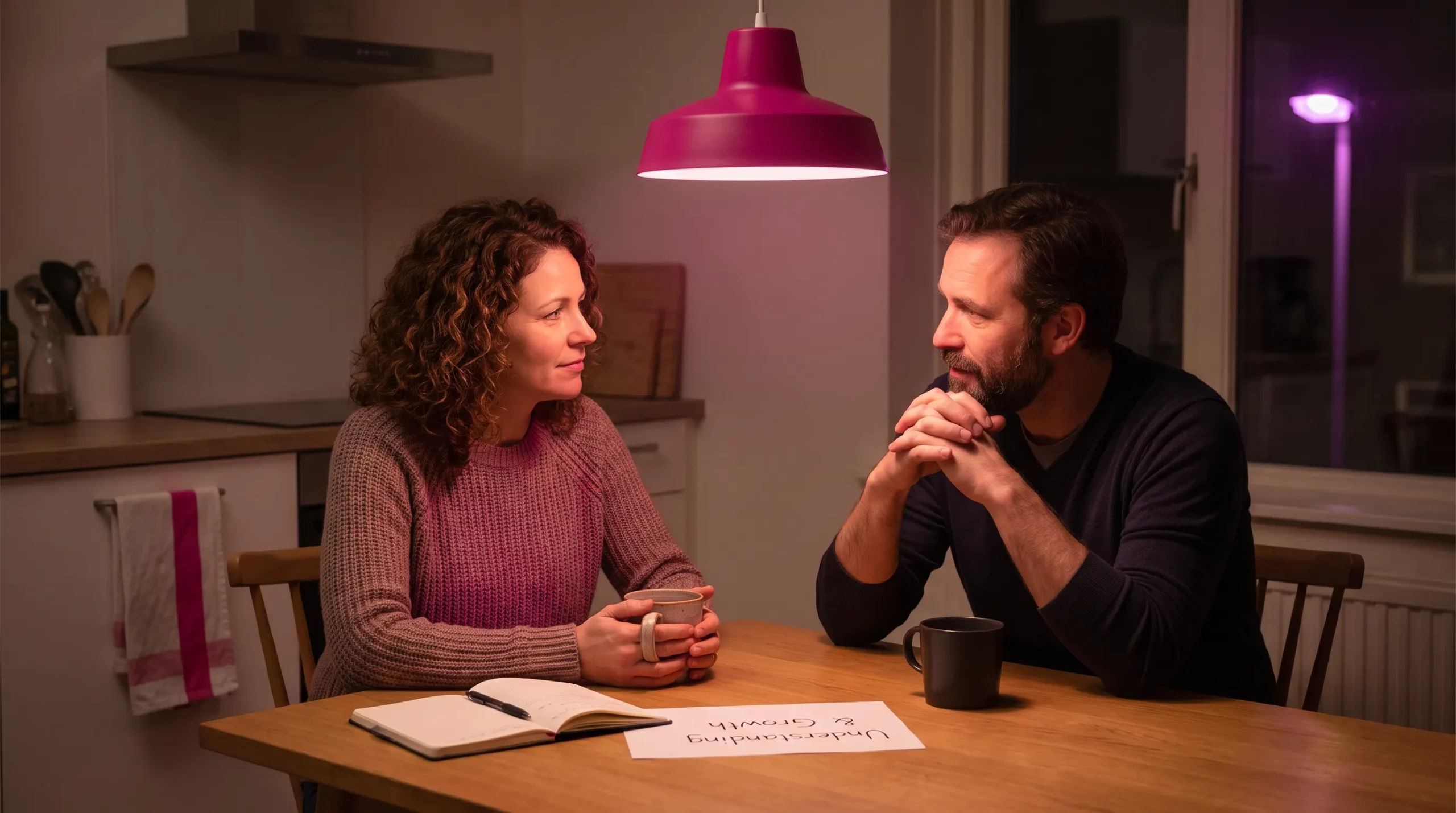
Interrupt the cycle with a targeted change
Protect sleep without making it a performance target
Choose a change that addresses your pattern. If planning tomorrow keeps you awake, move that planning earlier in the evening. If a late disagreement leaves you unsettled, agree not to begin non-urgent difficult conversations just before bed.
A reasonably consistent wake-up time and a quieter wind-down period can support sleep. Alcohol may make you feel sleepy initially but can disrupt sleep later, while caffeine can interfere with settling, especially when taken later in the day.
Supporting emotional wellbeing does not require a perfect bedtime routine. Start with one adjustment and see whether it makes mornings or evenings easier. If insomnia persists, ask your GP about suitable treatment, including cognitive behavioural therapy for insomnia, rather than relying only on general sleep tips.
Address pressure and repair connection
When demands feel overwhelming, identify what can actually change. That might mean asking someone to share a caring task, discussing priorities with a manager or getting advice about money. Recovery time helps, but it should not be used to make an unmanageable situation seem acceptable.
In relationships, explain your needs without using tiredness or stress to excuse hurtful behaviour. You might say: “I am exhausted and getting defensive. I want to talk about this properly after breakfast.”
Our guide to building mental wellbeing through small everyday actions offers ideas for fitting support into ordinary routines. Choose what suits the problem you have identified rather than trying to overhaul everything at once.
When to seek professional support
Speak to your GP if changes in emotional wellbeing persist, interfere with work or relationships, or make daily activities difficult. You do not need to wait until things become severe before asking for help.
It can help to bring a short account of what has changed: when sleep problems began, how you feel during the day and whether stress or conflict seems to trigger symptoms. Mention relevant medication, alcohol use, pain and physical symptoms as well. This gives a fuller picture than describing everything simply as “stress”.
An online screening quiz can help you organise your concerns, but it cannot diagnose a condition or rule one out. A reassuring result should not delay care if symptoms continue or you are worried.
If you might act on thoughts of harming yourself or cannot keep yourself safe, call 999 or go to A&E. For urgent mental health help that is not an emergency, contact your local NHS crisis service. In England, you can call NHS 111 and select the mental health option. Routes elsewhere in the UK vary.
Frequently asked questions
Can poor sleep cause relationship problems? Poor sleep can contribute to irritability, reduced patience and difficulty concentrating, which may make disagreements harder to handle. It is rarely the whole explanation, so address both the sleep problem and the concern within the relationship.
Does feeling stressed mean my emotional wellbeing is poor? Not necessarily. Stress is a normal response to pressure. The more useful questions are whether you can recover, whether support is available and whether the pressure is affecting sleep, health or daily life.
Will sleeping better make anxiety go away? Better sleep may help you cope, but it is not a guaranteed treatment for anxiety. Persistent or distressing symptoms deserve assessment, even if your sleep improves. Sleep support and mental health treatment may be needed together.
Can a health quiz tell me what is wrong? A screening quiz can highlight possible symptoms and suggest next steps. It cannot establish the cause or replace a clinical assessment. Use the result as a starting point for a conversation, not a final answer.
References
American Psychological Association: Sleep deprivation makes us less happy, more anxious (2023). Summary of experimental research on sleep loss and emotional functioning, including comments from Dr Cara Palmer.
NHS Every Mind Matters: Stress. Definition, symptoms and approaches to managing stress.
NHS: Insomnia. Typical sleep needs, sleep difficulties and treatment guidance.
NHS: Where to get urgent help for mental health. Guidance on urgent and emergency support.
Take the next step with HealthTest
HealthTest provides free, private screening quizzes for physical and mental health concerns, with immediate results intended to guide next steps rather than replace medical advice.
If you have questions about the website or its screening quizzes, contact HealthTest. If sleep, stress or relationship difficulties are affecting your daily life, speak to your GP as well. You do not need a quiz result before asking for support.