
Finding the right diabetes mental health support can help when the daily work of managing your condition starts affecting your mood, sleep or relationships. Checking glucose, planning meals, taking medication and worrying about complications can become exhausting, whether you have type 1 or type 2 diabetes.
Feeling overwhelmed does not mean you have failed at diabetes care. Emotional difficulties deserve attention alongside physical symptoms. Understanding whether you are experiencing diabetes distress, burnout, depression or changes linked to blood glucose can help you get the right support.
Why diabetes can affect your mood
Diabetes brings decisions that other people rarely see: adjusting plans around meals, carrying hypo treatments, interpreting readings and deciding how much to explain to friends or colleagues. Costs, work pressures and disrupted sleep can add to that load.
The relationship also works in the other direction. Depression can make it harder to organise prescriptions, eat regularly or attend appointments. Anxiety may lead to repeated checking or avoiding activities because you fear a hypo. These are reasons to adapt your care, not blame yourself.
The US Centers for Disease Control and Prevention (CDC) reports that people with diabetes are two to three times more likely to have depression than people without diabetes. This population-level estimate does not mean depression is inevitable for any individual. [1]
Both types of diabetes can affect emotional wellbeing. Type 1 often involves intensive insulin decisions, while people with type 2 may face treatment changes, stigma or unfair assumptions about how their condition developed.
What diabetes mental health difficulties can look like
Several experiences can overlap, but they do not all need the same response.
| Experience | What you might notice | A useful next step |
|---|---|---|
| Diabetes distress | Worry, frustration or guilt specifically about diabetes and its treatment | Ask your diabetes team which parts of care could be made easier |
| Diabetes burnout | Feeling exhausted by diabetes, disengaging or struggling to keep up with essential tasks | Arrange a review focused on workload and practical support |
| Depression | Persistent low mood, loss of enjoyment, hopelessness or changes in sleep and appetite | Speak to your GP about assessment and treatment |
| Anxiety | Ongoing fear, panic, repeated checking or avoidance, including fear of hypos | Discuss both emotional symptoms and any genuine glucose-related risks |
Diabetes distress is common. The CDC reports that 33% to 50% of people with diabetes experience it during any 18-month period. Distress is not automatically a depressive disorder, although the two can occur together. [1]
The NHS describes depression as “more than simply feeling unhappy or fed up for a few days”. [2] Low mood or loss of interest lasting around two weeks warrants a conversation with your GP, especially if daily life is becoming difficult. Seek help sooner if symptoms are severe.
Recognising diabetes burnout
Burnout is an informal term for feeling worn down by the relentless demands of diabetes. You may stop looking at readings, delay appointments or feel unable to face another decision. It is not a separate medical diagnosis, but the difficulties behind it are real.
Good diabetes mental health support addresses that workload rather than simply asking you to try harder. For example, your team could review whether your monitoring schedule, education needs or treatment arrangements are making care unnecessarily difficult.
Try describing the specific task you cannot sustain: “I am overwhelmed by overnight alarms” is more actionable than “I am bad at managing diabetes”. If you use a glucose sensor, ask your team to review alarms safely rather than switching off important alerts yourself.
Do not stop insulin to take a break from diabetes. If you are missing doses or struggling to take essential medication, contact your diabetes team promptly. A safer plan needs to be agreed with someone who understands your treatment.
Can blood glucose changes cause mood swings?
Yes. Low blood glucose, or hypoglycaemia, can cause irritability, anxiety, confusion and changes in behaviour. High glucose can leave you tired, thirsty or uncomfortable, which may also affect your mood. Type 1 diabetes does not inevitably cause mood swings, but glucose changes and treatment demands can contribute.
If you take insulin or another medicine that can cause hypos, check your glucose when sudden symptoms appear, if possible. A reading below 4 mmol/L needs prompt treatment. If you are awake and able to swallow, follow your hypo plan, using fast-acting carbohydrate and rechecking after 10 to 15 minutes. [3]
However, persistent sadness, hopelessness or anxiety should not be dismissed as “just your sugars”. When seeking diabetes mental health support, describe both your emotional symptoms and any pattern in glucose readings.
Stress hormones can also influence glucose, while disturbed sleep can worsen both mood and diabetes management. This overview of how hormones can influence mood offers wider background, but symptoms alone cannot establish a hormonal cause. Your GP can assess whether other physical factors, such as thyroid problems, need investigation.
What helps with distress, depression and anxiety?
Make diabetes care more manageable
Start with the part of your routine that is causing the most strain. That might be remembering medication, managing meals at work or worrying about overnight hypos. Ask your diabetes nurse, GP or specialist team for a review focused on that problem.
Useful diabetes mental health care combines emotional support with practical changes. Depending on your circumstances, this could involve structured diabetes education, a medication review, help understanding sensor information or advice from a diabetes dietitian. Technology can reduce some burdens but create others, so discuss how it actually affects your day.
Choose one achievable change rather than redesigning your whole routine. For example, ask a trusted person to help collect prescriptions or prepare questions for your next appointment.
A glucose reading is information, not a judgement of your character. Your team can help you interpret patterns without turning each result into a personal success or failure.
Treat depression and anxiety alongside diabetes
Treatment should reflect your symptoms, preferences and circumstances. Options may include cognitive behavioural therapy (CBT), other psychological therapies, medication or a combination. Diabetes-specific psychological support may be available through your care team, although local provision varies.
In England, adults can often self-refer to NHS Talking Therapies for anxiety and depression without a GP referral. Elsewhere in the UK, ask your GP about the local route into psychological support. Tell the service that you have diabetes so treatment can account for issues such as fear of hypos or the demands of self-management. [5]
If antidepressants are suggested, discuss your other medicines and any effects on appetite, weight or glucose. Do not stop prescribed treatment without advice.
The NHS states: “With the right treatment and support, most people with depression can make a full recovery.” [2] Recovery varies, but having diabetes does not put effective depression treatment out of reach.
You do not need to wait until diabetes mental health difficulties become a crisis before asking for help. Diabetes distress also deserves support even when you do not meet the criteria for depression.
Protect sleep and choose supportive company
Frequent overnight alarms, worry about hypos and depression can all disturb sleep. Tell your diabetes team if this is happening rather than assuming you must tolerate it. Recurrent night-time hypos need a clinical review, not just sleep advice.
Regular meals, a realistic sleep routine and movement you enjoy can support wellbeing, but they are not substitutes for treatment. If you use insulin or medicines that can cause hypos, follow your team's advice about glucose monitoring and activity.
Peer support can reduce isolation. Look for a moderated diabetes group where people share experiences without encouraging unsafe treatment changes or promising cures.
Family and friends can help most by asking what you need. “Would you like company at your appointment?” is usually more useful than commenting on every meal or reading. You remain entitled to privacy and a say in how others get involved.
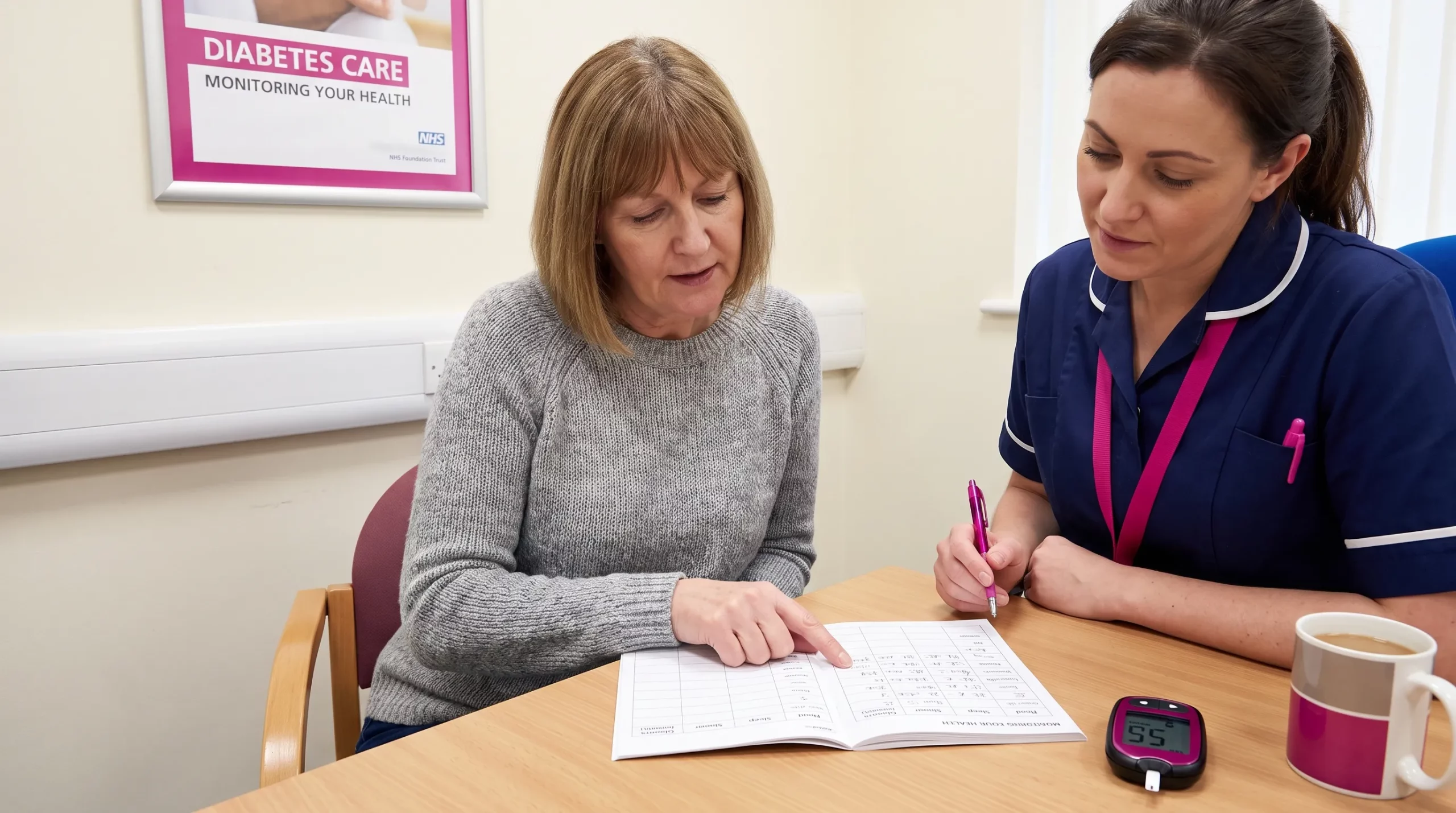
What to discuss with your GP or diabetes team
You can begin with: “Managing diabetes is affecting my mental health, and I need help with both.” You do not need a perfect explanation or a completed questionnaire before booking.
A short record can make the appointment more useful. Note when symptoms started, how they affect daily life and whether they coincide with glucose changes. Avoid intensive tracking if it makes you more anxious.
Consider mentioning:
- Changes in mood, enjoyment, sleep, appetite or concentration.
- Fear of hypos, repeated checking or avoidance of exercise, work or social plans.
- Missed medication, difficulties obtaining supplies or feeling unable to follow your care plan.
- Concerns about food, body image or deliberately reducing insulin to influence weight.
Ask who will coordinate your diabetes mental health care and when you will review progress. A referral is easier to follow through when you know what happens next and whom to contact if symptoms worsen.
If you are unsure how to describe persistent symptoms, our guide to recognising mental health problems and finding support explains how duration, severity and effects on daily life can guide that conversation.
When you need urgent help
Do not wait for a routine appointment if you cannot keep yourself safe. Call 999 or go to A&E if you are in immediate danger, have seriously harmed yourself or may act on suicidal thoughts. For someone to talk to, Samaritans is available free on 116 123, but it does not replace emergency care.
For urgent mental health support that is not an immediate emergency, contact your GP urgently or your local NHS crisis service. In England, you can call NHS 111 and select the mental health option.
Some apparent mood or behaviour changes are medical emergencies. Call 999 if someone with suspected severe hypoglycaemia is unconscious, having a seizure or not responding normally. Do not give food or drink to an unconscious person.
Vomiting, tummy pain, deep breathing or marked drowsiness can indicate diabetic ketoacidosis, especially alongside high glucose or raised ketones. Seek emergency assessment for suspected ketoacidosis.
Tell your diabetes team urgently if you are deliberately omitting insulin, particularly to influence weight. This can become dangerous quickly and needs specialist support, not judgement. Routine diabetes mental health screening is not a substitute for urgent assessment in any of these situations.
Frequently asked questions
Can diabetes cause depression? Diabetes is associated with a higher risk of depression, but there is no single explanation. Daily treatment demands, disrupted sleep, physical symptoms and other life pressures can contribute. Depression also occurs independently of diabetes and deserves its own assessment.
How do you deal with depression when you have diabetes? Ask your GP to assess your mood while involving your diabetes team in any self-management difficulties. Psychological therapy, medication when appropriate and practical adjustments can work together. Avoid relying on lifestyle changes alone when symptoms are persistent or severe.
What is T1D burnout? T1D burnout describes feeling exhausted or disengaged from managing type 1 diabetes. It may involve avoiding readings or appointments. Ask for diabetes mental health support and a manageable care plan rather than stopping insulin or trying to cope alone.
Can an online quiz tell whether I have depression or diabetes? No. A screening quiz can highlight possible symptoms and help you prepare for a conversation, but it cannot establish a diagnosis. Diabetes diagnosis requires appropriate clinical testing, while depression needs a clinical assessment. A reassuring quiz result should not override persistent symptoms.
References
- [1] CDC: Diabetes and mental health, including depression risk and diabetes distress estimates.
- [2] NHS: Overview of depression in adults, including the quoted descriptions and treatment outlook.
- [3] NHS: Low blood sugar (hypoglycaemia).
- [4] NICE: Type 1 diabetes in adults: diagnosis and management, including psychological support within diabetes care.
- [5] NHS: NHS talking therapies for anxiety and depression.
Take a first step towards support
If you want help putting your concerns into words, HealthTest's free online health screening quizzes offer private self-assessment and immediate results to help guide next steps. They do not diagnose conditions or replace advice from your GP or diabetes team.
Use any results as a conversation starter about diabetes mental health, not a reason to delay care. For questions about the website or its quizzes, contact HealthTest. For medical advice, worsening symptoms or urgent concerns, contact the appropriate healthcare service directly.