
Used well, screening tools can help you notice symptoms, recognise health risks and decide whether to seek advice. They turn a general feeling that something is wrong into information you can discuss with a healthcare professional. But a questionnaire score is not a diagnosis, and a reassuring result cannot rule out every problem.
Understanding what a tool measures, who it was designed for and what happens after the result makes it much more useful. Here is how to approach common questionnaires and checks without giving their scores more weight than they deserve.
A useful starting point, not a diagnosis
A screening test looks for signs that someone may need further assessment. It does not usually establish the cause of symptoms or confirm a condition on its own.
There is also a distinction between organised population screening and symptom questionnaires. NHS screening programmes generally invite people who appear healthy to be checked for particular risks or conditions. A questionnaire completed because you already feel anxious or low is often better described as symptom assessment or case-finding.
Both approaches can guide further investigation, but neither replaces a clinical conversation. A GP may need to consider your medical history, medicines, examination findings or laboratory results before recommending treatment.
The practical question is therefore not simply, “What is my score?” It is, “What should I do with this information?” A useful result should help answer that question, rather than leave you with an unexplained number.
Common screening tools used in healthcare
Different questionnaires measure different things. Some ask about recent symptoms; others combine measurements and clinical information to estimate risk.
| Tool | Main purpose | What the result cannot establish alone |
|---|---|---|
| PHQ-9 | Assess depressive symptoms over the previous two weeks | A confirmed diagnosis or the cause of low mood |
| GAD-7 | Assess anxiety symptoms over the previous two weeks | Every type of anxiety disorder or its cause |
| MUST | Identify adults at risk of malnutrition | A complete nutritional diagnosis or treatment plan |
These are established clinical examples. An online quiz may use a different questionnaire, so check which instrument, if any, it names.
PHQ-9: depressive symptoms
The Patient Health Questionnaire-9 asks nine questions about experiences such as low mood, loss of interest, sleep difficulties and concentration problems. Scores range from 0 to 27, with higher scores indicating a greater reported symptom burden.
In the original 2001 primary-care validation study, a score of 10 or above had 88% sensitivity and 88% specificity for major depression. These figures describe performance in that study, not a guarantee for every person or website.
Clinician-researchers Kurt Kroenke, Robert Spitzer and Janet Williams described the PHQ-9 as a “reliable and valid measure of depression severity”. Their findings support its clinical usefulness, but screening tools still need interpretation alongside symptoms, functioning and medical history.
An answer indicating thoughts of death or self-harm needs attention regardless of the total score.
GAD-7: anxiety symptoms
The Generalised Anxiety Disorder-7 questionnaire contains seven questions and produces a score from 0 to 21. It asks about experiences including persistent worry, difficulty relaxing and feeling afraid that something awful might happen.
In their 2006 validation paper, Robert Spitzer and colleagues called it “a valid and efficient tool for screening for GAD”. At a cut-off of 10, the study reported 89% sensitivity and 82% specificity for generalised anxiety disorder.
That does not mean the questionnaire identifies every anxiety-related problem. Panic attacks, obsessive-compulsive symptoms or trauma-related difficulties may require different questions and a fuller assessment.
MUST: risk of malnutrition
The Malnutrition Universal Screening Tool, usually called MUST, is used to identify adults at risk of malnutrition. It combines body mass index (BMI), unplanned weight loss over the previous three to six months and an acute disease effect score.
The acute disease component applies when someone is acutely ill and has had, or is likely to have, no nutritional intake for more than five days. A total score of 0 indicates low risk, 1 medium risk and 2 or more high risk, with management guided by the setting and clinical circumstances.
Unlike symptom-based screening tools, MUST requires measurements and information that may need professional help to obtain accurately. It is not an eating-disorder test, and having a higher body weight does not exclude nutritional risk. Unplanned weight loss deserves attention even when BMI remains in a higher range.
How to interpret a score without jumping to conclusions
A result is most helpful when you understand both what it suggests and what it might miss. Labels such as “positive”, “negative” or “moderate” are not complete explanations of your health.
Look first at the purpose of the questionnaire. Is it estimating risk, measuring symptom severity or suggesting that further assessment would be sensible? Those are different tasks.
A positive result can be a false alarm
A false positive happens when a test flags a possible condition that further assessment does not confirm. Symptoms often overlap: poor sleep and tiredness, for example, can occur with depression, physical illness, medicine side effects or demanding life circumstances.
Specificity describes how well a test identifies people who do not have the condition being assessed. Using the PHQ-9 study figure as an illustration, 88% specificity would mean roughly 12 positive results among 100 people without major depression under comparable conditions.
This is why screening tools should open a conversation rather than close one with a diagnosis. The proportion of positive results that prove correct also depends on how common the condition is in the group being tested.
A low score can still miss a problem
A false negative happens when a condition is present but the test does not flag it. This can occur because the questions do not capture your particular symptoms, you interpret them differently or your difficulties fluctuate.
Someone might also minimise symptoms because they feel embarrassed or have become used to struggling. Conversely, completing a questionnaire during an unusually difficult week may produce a result that needs more context.
Persistent symptoms, worsening symptoms and difficulty managing daily life matter even when a score is low. You do not need a particular number to justify asking for help.
The setting changes the meaning
Evidence from one group does not automatically apply to everyone. Age, language, disability, pregnancy and existing health conditions can affect whether a questionnaire is suitable and how its results should be interpreted.
A tool validated in adult primary care may not be appropriate for a child without adaptation and supporting evidence. An online version should also preserve the original wording, response options and scoring if it claims to use a validated instrument.
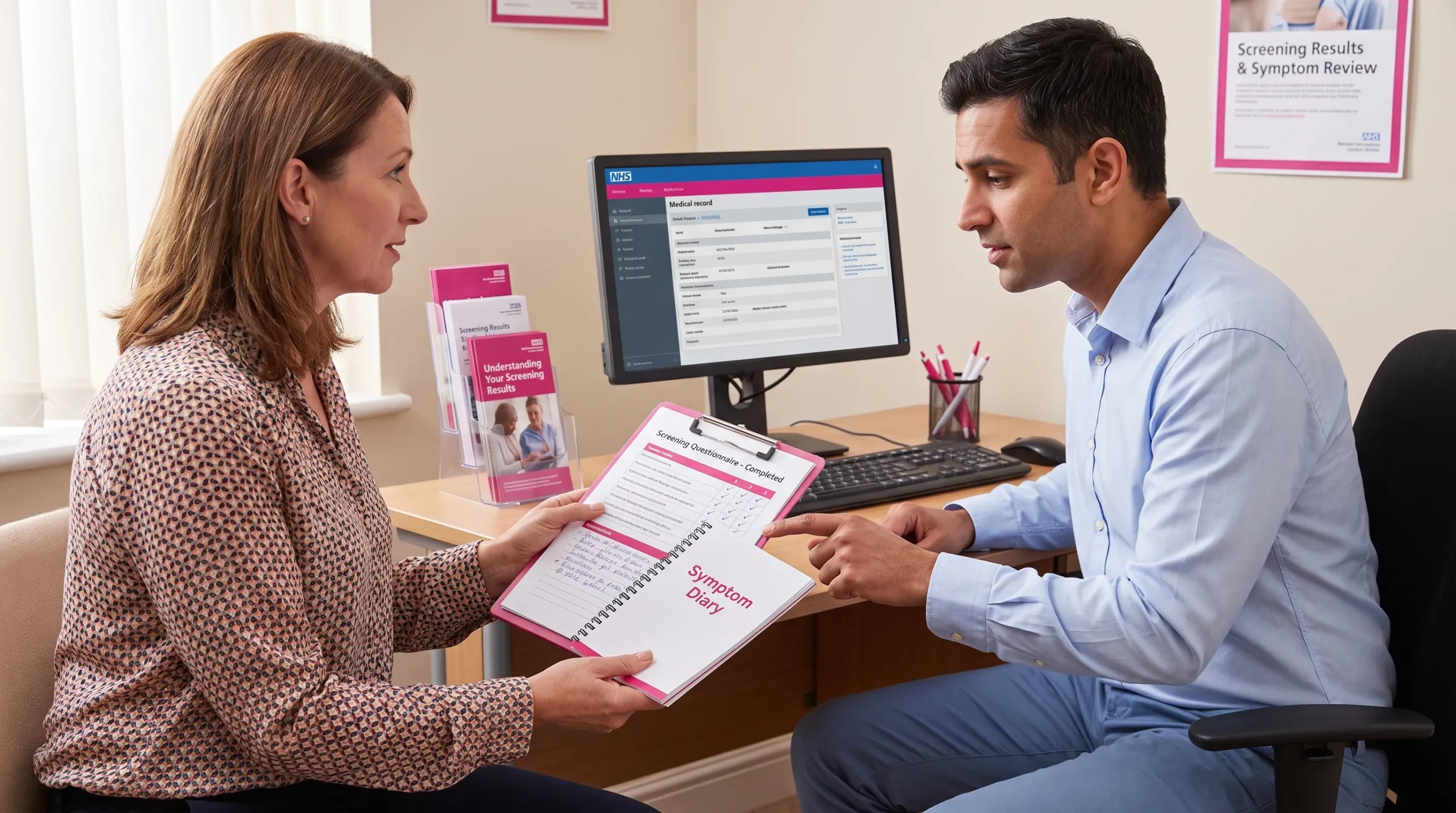
Get more value from a self-assessment
Answer for the time period stated in the instructions. If the questions cover the past two weeks, do not answer only for today or for the worst period you can remember. Choose the response closest to your actual experience, rather than the answer you think you should give.
Understanding the wording matters too. In education, study questions that reveal gaps in understanding illustrate the difference between recognising something familiar and examining it properly. The useful parallel is careful self-reflection, not clinical validity: a health questionnaire needs evidence that it measures its intended symptoms or risks.
Before relying on screening tools, check whether the provider explains their purpose, evidence, limitations and recommended next steps. Read its privacy information before entering sensitive health details. A professional-looking results page is not, by itself, proof of accuracy or confidentiality.
If you repeat an assessment, use the same questionnaire under reasonably similar circumstances. Changes can help structure a review, but a small score difference may reflect ordinary variation. Repeatedly retaking quizzes for reassurance can also become unhelpful, especially if it increases anxiety rather than informing action.
Turn your result into a useful GP conversation
Save the name of the questionnaire, the date, your score and any answers that concerned you. Add a brief account of when symptoms began, how often they occur and how they affect sleep, work, relationships or everyday tasks.
Mention medicines, supplements, recent illness and major changes in your circumstances. Physical and emotional symptoms can overlap, so it helps to understand how physical and mental health affect each other rather than assuming every symptom has the same explanation.
You could begin an appointment by saying: “I completed this questionnaire because I have been struggling with these symptoms. Could we discuss what might explain them and whether I need further assessment?”
That approach puts screening tools in their proper role: supporting a clearer account of your experience. A clinician may recommend monitoring, another assessment, investigations or treatment, depending on the wider picture. You do not need to arrive with a diagnosis already decided.
When not to wait for a test result
Do not complete an online questionnaire instead of seeking urgent help for severe or rapidly worsening symptoms. Call 999 or attend A&E for a life-threatening emergency, including immediate danger from self-harm, severe breathing difficulty or signs of a stroke.
For urgent mental health support that is not an immediate emergency, use your local NHS urgent mental health service. In England, you can call NHS 111 and select the mental health option. Routes elsewhere in the UK vary, so use your local NHS service or urgent GP support.
A reassuring score should never delay care when you feel unsafe or seriously unwell.
References
- NHS: Screening overview, including the purpose, benefits and limitations of screening.
- Kroenke, Spitzer and Williams: The PHQ-9, 2001, the original validation study supporting the quoted findings.
- Spitzer and colleagues: A brief measure for assessing generalised anxiety disorder, 2006, the original GAD-7 validation study.
- BAPEN: Malnutrition Universal Screening Tool, guidance on assessment and risk categories.
Frequently asked questions
Can an online health quiz diagnose a condition? No. It may identify symptoms or risks worth discussing, but diagnosis usually requires clinical assessment. Some conditions also need examination findings, blood tests or other investigations.
Are screening tools accurate? Their accuracy varies by instrument, purpose and population. Even well-validated questionnaires produce false positives and false negatives. Check the supporting evidence and use the result alongside your symptoms, not instead of them.
What is the difference between PHQ-9 and GAD-7? PHQ-9 assesses depressive symptoms, while GAD-7 assesses anxiety symptoms. Both ask about the previous two weeks, but they measure different experiences and have different scoring ranges.
Should I see a GP if my result is low but I still feel unwell? Yes, if symptoms persist, worsen or affect daily life. A low score does not invalidate your experience or rule out a condition that the questionnaire was not designed to detect.
Take a practical next step with HealthTest
Explore HealthTest’s free health self-assessment quizzes for a structured starting point and immediate results. Use them to prepare questions, not to replace medical advice.
If you have questions about using the website or its quizzes, contact the HealthTest team. For advice about symptoms, diagnosis or treatment, speak to your GP or another appropriate healthcare professional.