
Your stomach may churn before a difficult conversation, or bowel symptoms may worsen during a stressful week. These experiences reflect a real connection between gut health and mental health, but they do not mean every digestive problem starts in the mind or every episode of depression begins in the gut.
The digestive system and brain communicate through nerves, hormones and immune signals. Gut microbes also participate in this network. Understanding that relationship can help you make sensible choices about food, symptoms and treatment without falling for claims about miracle supplements or a “gut reset”.
How gut health and mental health communicate
The gut-brain axis is the two-way communication network linking your digestive system and brain. It includes the enteric nervous system, which helps control digestion, and connections with the central nervous system, including the vagus nerve.
Your gut microbiome, the community of microorganisms living in the digestive tract, interacts with this network. Microbes break down certain food components and produce substances such as short-chain fatty acids. Researchers are investigating how these substances influence the intestinal barrier, immune activity and brain function. (1)
This is not a simple chain in which one bacterium produces one emotion. Diet, medicines, infections, sleep and existing health conditions can all affect the same pathways. Although much of the body’s serotonin is produced in the gut, that serotonin does not simply travel into the brain and improve mood.
The connection between gut health and mental health is therefore better understood as an interacting system than a single cause of symptoms.
Why stress can upset your stomach
Stress changes the signals travelling between the brain and digestive system. It can alter bowel movement patterns and increase sensitivity to sensations that would otherwise feel mild. Some people develop urgency or diarrhoea, while others become constipated.
The relationship also works in reverse. Unpredictable bowel symptoms can make commuting, eating out or attending meetings feel difficult. Worry about the next episode may then intensify symptoms.
This cycle is particularly relevant to irritable bowel syndrome (IBS), a disorder of gut-brain interaction. It does not mean symptoms are imagined. Pain, bloating and changes in bowel habits are real, whether or not a scan shows a structural abnormality.
What does the research actually show?
Research has found differences in gut microbial communities between some groups with depression or anxiety and comparison groups. However, an association does not establish which change came first or whether one caused the other. (1)
People experiencing depression may eat differently, sleep poorly or take medicines that affect digestion. Those factors can also influence their microbiome. Animal experiments help investigate possible mechanisms, but their findings cannot automatically be applied to people.
For someone exploring gut health and mental health, the distinction matters: promising biology is not the same as a proven treatment. There is currently no single microbiome profile that can reliably explain an individual’s mood or identify the right psychiatric treatment.
Can changing your diet improve depression?
The 2017 SMILES trial randomly assigned 67 adults with moderate to severe depression to dietary support or a social-support comparison group over 12 weeks. Participants could continue their existing treatment. Depression remission occurred in 32.3% of the dietary-support group compared with 8.0% of the comparison group. (2)
Professor Felice Jacka and colleagues concluded that “dietary improvement may provide an efficacious and accessible treatment strategy”. That is encouraging, but this was a small trial. It did not establish that changes in gut bacteria caused the improvement or that diet should replace established depression treatment.
The practical message is to treat nutrition as one possible part of care. The evidence on gut health and mental health does not justify stopping antidepressants, abandoning therapy or blaming yourself for symptoms because your diet is imperfect.
Which symptoms deserve attention?
Digestive discomfort and emotional distress can overlap, but the pattern alone cannot identify the cause.
| What you notice | What it may tell you | A sensible next step |
|---|---|---|
| Bloating, abdominal pain or altered bowel habits | Several digestive conditions can cause these symptoms | Arrange a GP assessment if symptoms persist or recur |
| Symptoms becoming worse during stress | Gut-brain signalling may be contributing | Discuss both digestive symptoms and stress rather than assuming one explains everything |
| Low mood, anxiety or disrupted sleep alongside bowel symptoms | Both physical and mental health may need attention | Describe the full pattern to your GP |
| Symptoms starting after a medicine change | A side effect or another explanation may need reviewing | Speak to a pharmacist or prescriber before changing treatment |
You may encounter the term dysbiosis, meaning a disruption or imbalance in a microbial community. There is no symptom checklist that reliably diagnoses it, and routine commercial stool microbiome tests cannot tell you whether gut bacteria are causing depression.
When considering gut health and mental health together, avoid labelling persistent symptoms as “just stress”. Coeliac disease, inflammatory bowel disease, medicine effects and other conditions may need consideration.
For IBS specifically, the NHS explains: “There’s no cure, but diet changes and medicines can often help control the symptoms.” (3) That describes IBS management, not a reason to leave new or changing symptoms unchecked.
Practical ways to support digestion and wellbeing
Build fibre gradually rather than chasing a perfect diet
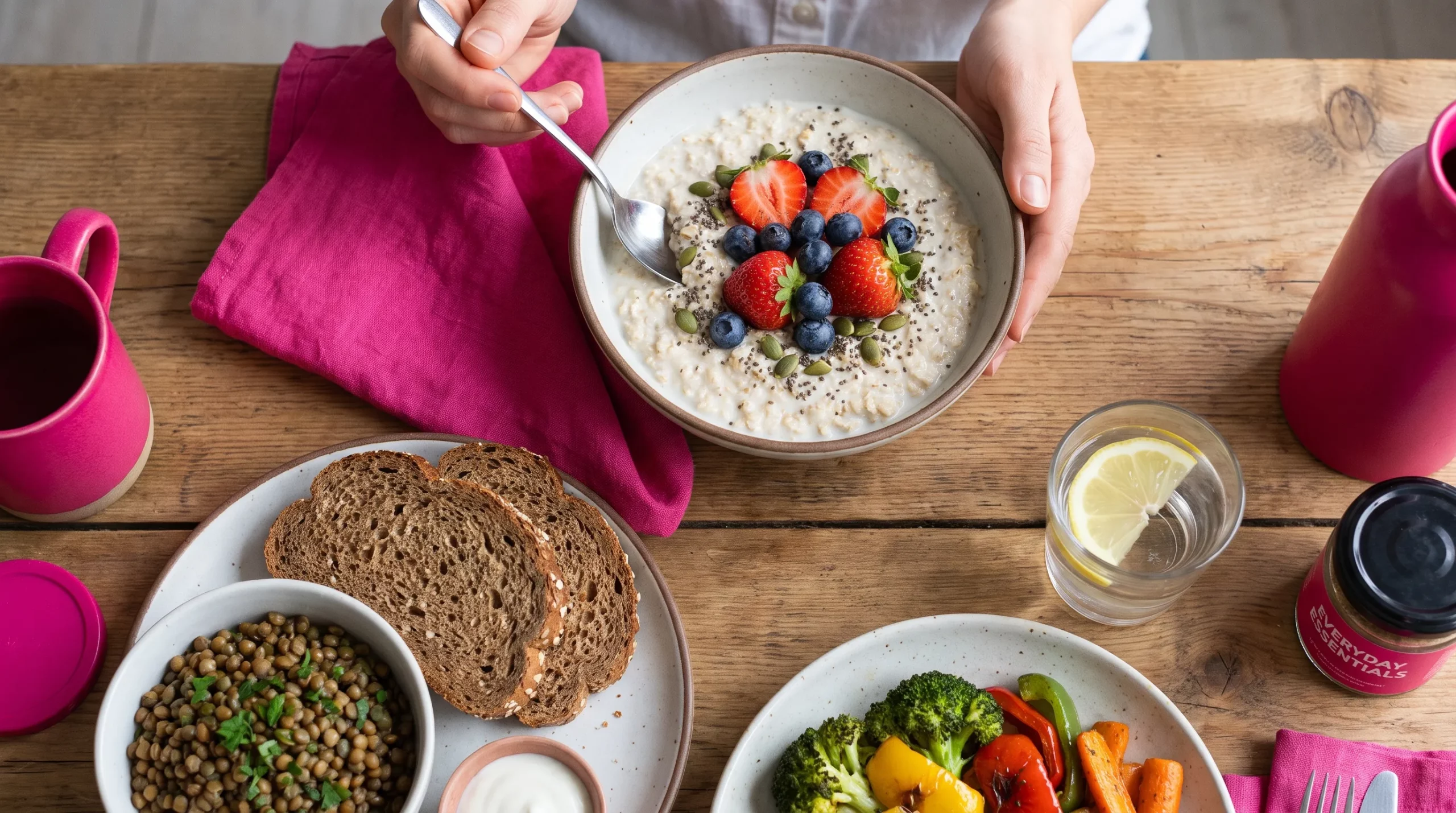
UK guidance recommends 30g of fibre a day for adults. Useful sources include oats, wholegrain bread, beans, lentils, fruit, vegetables, nuts and seeds. Increase your intake gradually and drink enough fluid, because a sudden increase can worsen wind and bloating. (4)
Fibre recommendations need adapting when you have bowel symptoms. NICE advises reviewing fibre intake in IBS and, when an increase is appropriate, generally favouring soluble fibre such as oats or ispaghula over insoluble bran. (5)
A realistic starting point might be porridge at breakfast or a small portion of lentils added to a familiar meal. If several foods trigger symptoms, seek advice rather than progressively removing whole food groups.
Supporting gut health and mental health through food should improve nourishment and flexibility, not create anxiety around eating. A dietitian can help if symptoms, restrictive eating or an existing medical condition make changes difficult.
Be cautious with probiotics and restrictive diets
Probiotic effects depend on the strain, dose and condition being studied. A product marketed for “gut balance” is not automatically an effective treatment for anxiety or depression. Research into so-called psychobiotics remains an emerging field, not a replacement for mental healthcare. (1)
For people with IBS who choose to try a probiotic, NICE advises taking it for at least four weeks at the manufacturer’s recommended dose while monitoring its effect. (5) Trying several products simultaneously makes it harder to know whether anything helps.
A low-FODMAP diet can help some people with IBS, but it is not a general mood-improving diet. It involves restriction followed by reintroduction and personalisation, ideally with a suitably trained healthcare professional. Long-term, unsupervised restriction can make eating unnecessarily difficult.
Address the stress-symptom cycle and wider health
Regular meals, manageable physical activity and a consistent sleep routine can support wellbeing without requiring expensive testing. For some people with ongoing IBS, psychological treatments such as cognitive behavioural therapy may form part of care. These treatments address symptom-related distress and gut-brain processes, not imaginary illness. (5)
Looking at gut health and mental health together also means checking whether other issues need attention. Persistent fatigue, appetite changes or brain fog may warrant a broader clinical assessment rather than a supplement purchase.
This overview of how metabolic health can affect mood and cognition explains why sleep, hormones, medicines and metabolic conditions sometimes belong in that assessment. They do not explain every mental health condition.
Our guide to how physical and mental health affect each other explores this wider relationship. Any medicine changes should be discussed with the clinician who prescribes them.
When to seek medical help
Arrange a GP appointment if bowel symptoms keep returning, change noticeably or interfere with everyday life. Seek prompt medical advice for unexplained weight loss, blood in your stool, black or tarry stools, persistent vomiting or unusual tiredness that could indicate anaemia. Do not assume these symptoms are caused by stress or a microbiome imbalance.
Low mood lasting more than two weeks, persistent anxiety or difficulty coping also deserves support. You do not need to resolve digestive symptoms before asking for mental healthcare.
A joined-up discussion about gut health and mental health can start with a brief record of symptoms, meals, bowel habits, sleep and medicines. Include what symptoms stop you doing, not just how often they happen. Avoid detailed tracking if it increases anxiety or food restriction.
Call 999 or attend A&E if you have sudden, severe abdominal pain or are in immediate danger of harming yourself. For urgent concerns that are not an emergency, contact your GP or NHS 111 where available.
Frequently asked questions
Can poor gut health cause anxiety or depression? Gut processes may contribute to symptoms in some people, but anxiety and depression have multiple possible influences. Current evidence cannot establish that an individual’s microbiome is the cause. Assessment should consider psychological, social and medical factors rather than focusing only on the gut.
How can I restore gut health after antibiotics? Take antibiotics exactly as prescribed and ask your pharmacist or prescriber about side effects. Continue a varied diet as tolerated rather than buying a “reset” package. Probiotics are not necessary for everyone. Seek medical advice for significant or persistent diarrhoea, especially with fever, pain or blood.
Can I repair my stomach lining with food or supplements? The stomach lining and intestinal barrier are different structures. Persistent pain or other digestive symptoms need an assessment of their cause, not a generic “lining repair” plan. Claims that supplements heal a “leaky gut” and cure mental illness go beyond established evidence.
How quickly will dietary changes improve my mood? There is no reliable timetable for changes in gut health and mental health. Some digestive symptoms may change relatively quickly, while mental health improvement depends on many factors. Seek support for persistent symptoms rather than waiting for a diet or supplement to work.
References
- Cryan JF and colleagues. The microbiota-gut-brain axis. Physiological Reviews, 2019. Review of mechanisms and evidence linking microbes, gut function and the brain.
- Jacka FN and colleagues. A randomised controlled trial of dietary improvement for adults with major depression: the SMILES trial. BMC Medicine, 2017.
- NHS. Irritable bowel syndrome overview. Information about symptoms and management.
- NHS. How to get more fibre into your diet. UK adult fibre recommendations and food sources.
- NICE. Irritable bowel syndrome in adults: diagnosis and management, CG61. Recommendations covering assessment, diet and treatment.
Take a first step towards understanding your symptoms
If you are unsure how to describe your concerns, HealthTest’s free health screening questionnaires offer a private way to reflect on possible physical and mental health symptoms, with immediate results to help guide next steps. They cannot diagnose a condition or replace medical advice.
For questions about the website or its screening quizzes, contact HealthTest. For persistent, worsening or worrying symptoms, speak to a healthcare professional rather than relying on an online result.